
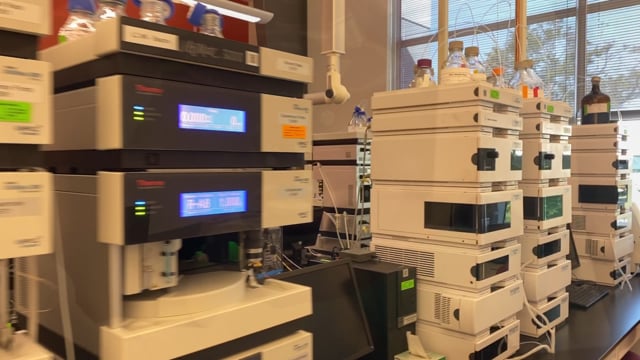
Defining Advanced Technology in Pharmaceutical Formulation
Advanced technology in pharmaceuticals encompasses a broad array of tools, systems, and techniques designed to optimize every stage of formulation development. In the context of drug product formulation, “advanced technology” often refers to the integration of automation, robotics, high-throughput analytical instruments, digital data management, and novel material science applications. These technologies are not limited to large-scale manufacturing; they play a pivotal role at the R&D and preclinical stages, where precision, reproducibility, and data-driven decision-making are critical.
For pharmaceutical development partners like Dow Development Labs, advanced technology in pharmaceuticals is central to staying aligned with regulatory expectations and market needs. Examples include automated compounding platforms that minimize human error, digital systems for real-time tracking of formulation parameters, and the application of predictive modeling to anticipate stability outcomes. Advanced analytics, such as near-infrared (NIR) spectroscopy or online particle size measurement, may help scientists to rapidly characterize prototype formulations and accelerate the process of product optimization.
For further reading, see Examples of Accepted Emerging Technologies from the FDA.
- Automation: Robotic liquid handlers and in-process sample collection reduce manual variability.
- Digital Integration: Laboratory Information Management Systems (LIMS) facilitate data integrity and traceability.
- Material Science: Use of novel excipients and carriers to improve solubility or penetration, especially in topical and ophthalmic dosage forms.
The adoption of these advanced technologies is not just about operational efficiency. It supports robust data generation, reproducibility, and regulatory compliance—qualities that are essential for successful development and eventual commercialization of pharmaceutical products.
The Evolving Landscape: Why Pharmaceutical Formulations Require Technological Innovation
The pharmaceutical landscape has evolved rapidly, driven by increasing molecular complexity, heightened regulatory scrutiny, and rising expectations for patient-centric drug products. Traditional formulation methods, while foundational, are often insufficient for addressing the demands of today’s therapies—especially as more drug candidates feature challenging physicochemical properties or require novel delivery pathways.
Several key factors are driving the need for advanced technology in pharmaceuticals:
- Complex APIs: Modern drug candidates, particularly peptides, biologics, and highly lipophilic small molecules, may present significant formulation challenges such as low solubility or stability issues.
- Personalized & Targeted Therapies: The growth of personalized medicine and specialty drugs has created a need for customized formulations and adaptable manufacturing approaches.
- Regulatory Expectations: Regulatory agencies increasingly expect detailed process understanding, robust data capture, and risk-based development strategies—all of which benefit from technological solutions.
- Speed to Clinic: Accelerating early-phase development and reducing cycle times are crucial for competitive positioning, especially for biotech innovators.
For example, topical and ophthalmic drug development often involves overcoming barriers to absorption or achieving local bioavailability with minimal systemic exposure. Advanced formulation tools, such as microfluidic mixing or in situ gelling systems, can support these complex requirements. Dow Development Labs, based in Petaluma, CA, recognizes this need and supports clients by integrating applicable technologies to streamline development and maximize formulation performance within regulatory frameworks.
Ultimately, pharmaceutical formulation is no longer just a matter of combining ingredients; it is a dynamic, technology-driven discipline that requires continuous adaptation and innovation.
How Advanced Technology in Pharmaceuticals Is Transforming Formulation Design
The integration of advanced technology in pharmaceuticals is revolutionizing how formulation scientists approach the design and optimization of drug products. Sophisticated computational tools, high-throughput screening, and predictive modeling are now common in early-stage development. These technologies allow for systematic exploration of excipient compatibility, real-time monitoring of product attributes, and rapid iteration of prototypes.
A practical example is the use of Design of Experiments (DoE) platforms, which enable teams to efficiently investigate multiple formulation parameters in parallel. By leveraging statistical modeling and automated data capture, scientists can identify key variables that impact product stability, texture, or delivery effectiveness. This approach reduces development time and resource expenditure—while improving the robustness of the final formulation.
- Predictive Modeling: In silico simulation tools can forecast solubility, viscosity, or drug-excipient interactions, minimizing the need for exhaustive bench trials.
- High-Throughput Screening: Automated platforms can screen excipient combinations or process conditions at micro-scale, supporting rapid identification of promising candidates.
- Real-Time Analytics: Inline monitoring technologies such as Raman spectroscopy provide immediate feedback during formulation development, enabling data-driven adjustments.
An example relevant to topical drug products is the application of rheological profiling tools that quantify texture and spreadability, directly supporting the development of patient-friendly creams or gels. By employing such advanced technology in pharmaceuticals, formulation scientists gain a deeper understanding of product attributes—and can more confidently progress formulations toward scale-up and clinical evaluation.
The result is a more agile, informed, and risk-mitigated approach to formulation design—one that aligns with regulatory expectations and the unique needs of today’s complex therapeutic agents.
Automation and Robotics: Enhancing Precision and Efficiency in Formulation Development
Automation and robotics have become essential for modern pharmaceutical formulation laboratories seeking to enhance precision, efficiency, and data integrity. These technologies are designed to minimize human error, standardize workflows, and accelerate repeatable processes—critical benefits in an industry where batch-to-batch consistency and regulatory traceability are paramount.
Some common applications of automation and robotics in pharmaceutical formulation include:
- Automated Compounding: Robotic liquid handlers and powder dispensers can precisely measure and blend multiple components, supporting both small-scale R&D batches and process development studies.
- Sample Preparation: Automated dilution, filtration, and aliquoting systems reduce manual intervention and variability, benefiting both analytical and formulation workflows.
- High-Throughput Screening: Robotic platforms capable of preparing dozens or hundreds of samples in parallel expedite excipient screening and compatibility studies.
The integration of these systems is particularly valuable in topical and ophthalmic product development, where precise dosing and homogeneity are critical. For example, automated mixing systems can be programmed to reproduce complex compounding protocols, ensuring that viscosity modifiers, preservatives, and active ingredients are incorporated with consistent results.
Dow Development Labs utilizes automation where appropriate to help support accuracy and reproducibility for clients’ development programs. This may include robotic sample handling in analytical workflows, or automated weighing and dispensing for formulation screening.
While automation does not eliminate the need for expert oversight, it does allow scientists to focus on higher-value tasks such as data interpretation and experimental design—ultimately contributing to faster, more robust formulation development.
Digital Analytics and Data Integration: Driving Informed Formulation Decisions
Digital analytics and integrated data systems are now foundational to informed decision-making in pharmaceutical formulation development. With the increasing complexity of formulations and regulatory requirements, effective data management is essential for maintaining data integrity, supporting QA/QC processes, and facilitating regulatory submissions.
Key elements of digital analytics and data integration commonly used in formulation labs include:
- Laboratory Information Management Systems (LIMS): These platforms centralize and standardize data entry, storage, and retrieval, enabling traceability and audit-readiness.
- Real-Time Monitoring: Analytical instruments capable of streaming data directly to digital dashboards allow for immediate assessment of critical parameters, such as pH, viscosity, or particle size.
- Data Visualization Tools: Dashboards and graphical analytics help teams quickly identify trends, outliers, or correlations in complex datasets.
For example, in a topical semisolid formulation project, real-time rheological data can be integrated with batch records to track consistency and support process optimization. In ophthalmic product development, digital capture of sterility and particulate test results ensures compliance with regulatory standards and expedites reporting.
Digital analytics also support the application of Quality by Design (QbD) principles, allowing teams to map critical quality attributes (CQAs) and process parameters, and to link them with product performance or stability outcomes. This holistic, data-driven approach is increasingly expected by regulatory agencies and is instrumental in risk-based development strategies.
Dow Development Labs leverages digital systems to streamline project management, data collection, and reporting—helping clients maintain transparency and control throughout the development lifecycle.
Novel Materials and Delivery Technologies Advancing Drug Product Formulations
Innovations in materials science and delivery technologies are at the heart of recent progress in pharmaceutical formulation. The ability to improve active pharmaceutical ingredient (API) solubility, control drug release, or enhance tissue penetration often depends on the creative application of advanced excipients and carriers.
Some notable advances in this area include:
- Lipid-Based Systems: Self-emulsifying drug delivery systems (SEDDS), nanoemulsions, and liposomes may help address solubility and bioavailability challenges for topical and ophthalmic APIs.
- Polymeric Carriers: Hydrogels, in situ gelling systems, and biodegradable microspheres enable controlled release and targeted delivery, reducing dosing frequency and improving patient compliance.
- Pulmonary and Nasal Delivery: For certain actives, novel spray-dried powders and mucoadhesive excipients extend the range of viable delivery routes.
An example relevant to topical drug development is the use of permeation enhancers or nanoemulsion technology to facilitate drug penetration through the stratum corneum, which is a significant barrier for many APIs. In ophthalmic formulations, advanced polymers may be employed to extend ocular residence time, thereby reducing the need for frequent dosing.
The careful selection and characterization of novel excipients, however, must always be balanced with regulatory and safety considerations. Dow Development Labs works with clients to evaluate excipient functionality and compatibility, leveraging advanced analytical tools to support the development of stable, effective, and patient-friendly formulations.
As the toolkit of advanced materials expands, formulation scientists are better equipped to address the unique delivery challenges presented by modern drug candidates.
Challenges and Considerations When Integrating Advanced Technologies in Formulation
While the benefits of advanced technology in pharmaceuticals are substantial, integrating these innovations into formulation workflows can present several challenges. Companies must carefully weigh the potential gains in efficiency, data quality, and product performance against practical, regulatory, and business considerations.
Common challenges include:
- Capital Investment: Automation platforms, sophisticated analytics, and digital systems often require significant upfront investment and ongoing maintenance.
- Workforce Training: Adoption of new technologies necessitates specialized training and may require a shift in organizational culture.
- Data Security and Compliance: Digital integration introduces new considerations for data integrity, cybersecurity, and regulatory compliance under frameworks like 21 CFR Part 11.
- Technology Fit: Not every advanced tool is appropriate for every formulation type or development stage; careful assessment of project requirements is essential.
In addition, the selection and validation of novel excipients or delivery systems must be guided by a clear understanding of regulatory expectations and safety profiles. For example, the use of excipients that are not previously approved for ophthalmic or topical use may require additional toxicology studies or regulatory review.
Dow Development Labs helps clients navigate these complexities by providing experienced guidance on technology selection and implementation, and by maintaining a focus on practical, risk-based development strategies. Collaborating with a partner that understands both the technical and regulatory landscape is critical for maximizing the benefits of advanced technology in pharmaceuticals without introducing unnecessary risk.
The Future Outlook: Advanced Technology’s Ongoing Role in Pharmaceutical Formulation
Looking ahead, advanced technology in pharmaceuticals will continue to shape the future of drug product formulation. The ongoing evolution of automation, digital analytics, and novel materials is expected to further enhance the speed, quality, and adaptability of formulation development—particularly for complex and patient-centric therapies.
Key trends shaping the future include:
- Expanded Use of Artificial Intelligence (AI): AI-driven analytics and machine learning algorithms may help predict formulation performance, optimize process parameters, and identify potential risks earlier in the development lifecycle.
- Integrated Digital Workflows: Seamless data flow from discovery through commercialization will support more agile development and facilitate regulatory submissions.
- Personalized Formulation: Technologies enabling small-batch, adaptive manufacturing may help address the growing demand for personalized medicine and rare disease treatments.
For formulation development partners like Dow Development Labs, staying at the forefront of these trends means continuously evaluating new technologies and refining processes to support clients’ evolving needs. The focus remains on applying advanced technology judiciously—balancing innovation with practicality, quality, and regulatory compliance.
As drug products become more complex and regulatory expectations continue to rise, the strategic application of advanced technology in pharmaceuticals will be increasingly vital to successful formulation development. By embracing these innovations, pharmaceutical teams can help bring safer, more effective, and more user-friendly therapies to patients worldwide.
Ready to explore how advanced technology can support your topical or ophthalmic drug development program? Contact Dow Development Labs in Petaluma, CA at 707-202-6965 to discuss your project needs with our experienced team of formulation scientists and development professionals.
Frequently Asked Questions
What advanced technologies are commonly used in pharmaceutical product formulation?
Common advanced technologies include automation with robotic liquid handlers, high-throughput analytical instruments, real-time digital data management, and predictive modeling tools. These help improve accuracy, speed, and reliability across all stages of drug development.
How does automation improve pharmaceutical formulation processes?
Automation reduces manual errors and variability by using robots for tasks like liquid handling and sample collection. This leads to more consistent results and faster turnaround times in both research and manufacturing.
Why is digital integration important in pharmaceutical R&D?
Digital systems like Laboratory Information Management Systems (LIMS) ensure data integrity, traceability, and compliance with regulatory standards. They also make it easier to track formulation changes and optimize product development.
How can pharmaceutical companies partner with experts in advanced formulation technology?
Companies like Dow Development Labs specialize in integrating advanced technologies into pharmaceutical development. To learn how their expertise can streamline your product development, you can contact them directly at 707-202-6965.
What are the benefits of using advanced analytics like NIR spectroscopy in drug formulation?
Advanced analytical techniques such as near-infrared (NIR) spectroscopy allow rapid, non-destructive testing of prototype formulations. This speeds up the optimization process by providing immediate feedback on key physical and chemical properties.