
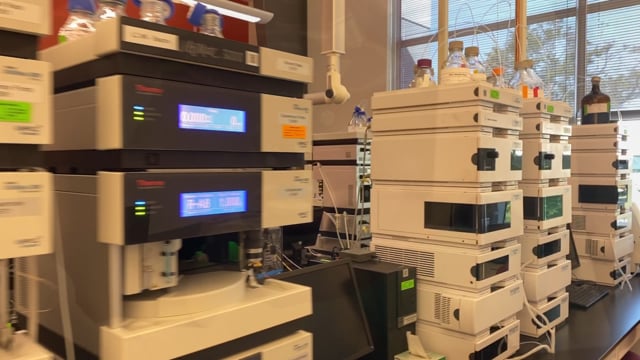
Why Formulation Expertise Is Foundational in Topical Drug Development
In the pharmaceutical industry, the topical drug formulation process is a critical path that shapes the success of products intended for dermal, transdermal, and ophthalmic delivery. Formulation expertise is not just about mixing ingredients; it is the cornerstone of designing drug products that are safe, effective, and manufacturable. A deep understanding of excipient compatibility, drug solubility, permeation behavior, and stability profiles is vital from the earliest stages of development.
Topical drug products, unlike oral or parenteral forms, interact directly with the skin or mucosal tissues, creating unique challenges and opportunities. The selection of the right vehicle—be it a cream, gel, ointment, or solution—directly affects drug delivery, patient experience, and ultimately, clinical success. For example, the choice between an emulsion and a hydrogel may dramatically influence both the bioavailability of the active pharmaceutical ingredient (API) and the product’s sensory attributes.
Formulation scientists must be adept at balancing these variables while meeting regulatory expectations for quality, purity, and reproducibility. Analytical method development, excipient screening, and prototype stability studies all depend on a nuanced understanding of formulation science. This expertise allows project teams to anticipate potential hurdles in the topical drug formulation process and address them proactively, reducing costly delays and development cycles.
For further reading, see Generic Development of Topical Dermatologic Products from the National Institutes of Health.
At Dow Development Labs in Petaluma, CA, formulation teams collaborate with clients to translate early-stage concepts into robust, scalable topical drug products. Their approach combines scientific rigor with industry experience, helping sponsors navigate from preclinical feasibility to clinical manufacturing with confidence.
Key Challenges Unique to the Topical Drug Formulation Process
The topical drug formulation process presents a distinct set of challenges, unlike those encountered in oral or injectable drug development. Each challenge requires targeted expertise to address effectively and efficiently.
- Skin Barrier Complexity: The stratum corneum, the outermost layer of the skin, presents a formidable barrier to drug permeation. Achieving therapeutically relevant drug concentrations at the target site without causing irritation or systemic exposure requires careful formulation design.
- Excipient Selection and Compatibility: Topical excipients must be selected for compatibility with both the API and the skin. Preservatives, penetration enhancers, and emulsifiers must be evaluated for safety and efficacy, as well as their impact on product stability and user experience.
- Variable Skin Types and Conditions: Patient variability—including age, skin hydration, and presence of disease—can impact drug absorption and product performance. Formulation must be designed with these variables in mind to ensure consistent outcomes across diverse patient populations.
- Physical and Chemical Stability: Topical products are often exposed to light, heat, and humidity during storage and use. Maintaining stability of both API and excipients is essential for shelf-life and regulatory compliance.
- Dosage Uniformity and Spreadability: Ensuring even API distribution throughout semi-solid or liquid formulations is challenging, particularly in multi-dose containers. Uniformity is crucial for accurate dosing and reproducibility.
Addressing these challenges in the topical drug formulation process requires not only technical capabilities but also a comprehensive understanding of how formulation choices impact every step from development to patient application.
How Formulation Expertise Supports Early-Stage Topical Product Design
Early-stage topical product design is where formulation expertise offers the greatest leverage. At this phase, decisions made about excipient selection, API concentration, and prototype formats set the trajectory for downstream development, regulatory strategy, and even commercial success. A formulation expert brings a holistic perspective, connecting scientific, manufacturing, and regulatory requirements.
For instance, during pre-formulation, solubility and compatibility studies help identify the most promising vehicles, such as oil-in-water emulsions or alcohol-based gels. Formulators may run a series of rapid screening experiments to determine:
- API solubility in various excipients
- Potential for API-excipient interactions
- Impact of formulation pH on stability and skin tolerance
- Initial viscosity and spreadability profiles
These data inform the selection of lead formulations for further optimization. At Dow Development Labs, for example, formulation teams often conduct parallel prototype evaluations, using both in vitro release testing and analytical characterization to quickly identify formulations with optimal performance characteristics.
Early engagement with a formulation-focused development partner can also help anticipate manufacturing and scale-up considerations, such as batch homogeneity and process robustness. This foresight reduces the risk of late-stage surprises that can derail timelines and budgets.
Mitigating Risk Through Specialized Formulation Knowledge
Risk mitigation is a central concern throughout the topical drug formulation process. Specialized formulation knowledge is instrumental in identifying and addressing potential pitfalls before they escalate into project-delaying obstacles. Common risks include chemical instability, poor product aesthetics, inadequate bioavailability, and batch-to-batch variability.
Some actionable strategies enabled by formulation expertise include:
- Comprehensive Excipient Screening: Early identification of excipients that may cause degradation, precipitation, or adverse skin reactions.
- Forced Degradation and Stability Studies: Proactive stress testing of prototypes under extreme conditions (e.g., elevated temperature, humidity, light) to reveal potential failure modes.
- Analytical Method Development: Designing validated methods for quantifying API and key degradants, supporting robust quality control.
- Scalability Assessments: Evaluating mixing, homogenization, and filling processes at bench scale to anticipate technical transfer challenges.
- Patient Usability Testing: Early assessment of application, spreadability, and sensory attributes to minimize later-stage reformulation.
At Dow Development Labs, formulation scientists routinely integrate risk assessment tools and phase-appropriate development strategies, helping clients identify issues early and implement corrective actions before they impact regulatory or clinical milestones.
Formulation Expertise and Its Role in Topical Drug Product Optimization
Optimization of a topical drug product is a multi-faceted endeavor, requiring iterative refinement of both the formulation and the manufacturing process. The goal is to achieve a product that is stable, effective, reproducible, and acceptable to patients and healthcare providers. The topical drug formulation process at this stage focuses on fine-tuning key variables such as viscosity, spreadability, and API release profiles.
| Optimization Focus | Formulation Considerations |
|---|---|
| Stability | Adjusting pH, antioxidants, or preservatives to improve shelf-life |
| Bioavailability | Evaluating penetration enhancers or solubilizers for increased skin absorption |
| Patient Acceptability | Refining texture, odor, and appearance to enhance user experience |
| Manufacturability | Streamlining mixing and filling processes to ensure batch consistency |
For example, a common optimization challenge encountered is the need to modify an emulsion’s viscosity without compromising drug release or stability. Formulation experts may test different thickening agents or emulsifier systems, using iterative batches and analytical testing to home in on a robust solution. In some cases, even small changes to excipient levels can significantly improve product performance without requiring major reformulation.
Dow Development Labs supports clients through these optimization cycles, leveraging their experience with a broad range of topical formats and APIs to help sponsors efficiently refine their drug product candidates.
Ensuring Regulatory Readiness: The Value of Topical Formulation Experience
Regulatory approval for topical drug products demands clear, comprehensive data on formulation composition, manufacturing process, and product performance. The topical drug formulation process must generate documentation that satisfies FDA and ICH requirements for CMC (Chemistry, Manufacturing, and Controls) sections of regulatory submissions, such as INDs and NDAs.
Formulation expertise helps ensure regulatory readiness by:
- Preparing Detailed Formulation and Process Descriptions: Clear, reproducible documentation of all formulation ingredients, their functions, and manufacturing steps.
- Supporting Stability and Compatibility Studies: Generation and interpretation of data for shelf-life assignment and packaging suitability.
- Assisting in Analytical Method Validation: Development of reliable, validated methods that align with regulatory expectations for potency, purity, and uniformity.
- Facilitating Technology Transfer: Providing the technical foundation for successful transfer from development to GMP manufacturing sites.
Formulation scientists with regulatory experience help bridge the gap between product design and regulatory compliance, minimizing the risk of information gaps or deficiencies in regulatory filings. At Dow Development Labs, teams work closely with regulatory and quality partners to align development activities with submission requirements, supporting a smoother review process for sponsors.
Case Examples: How Formulation Expertise Drives Success in Topical Development
While each topical drug development project is unique, there are common scenarios where formulation expertise has played a decisive role in overcoming development hurdles and advancing products toward clinical evaluation. Here are several illustrative examples:
- Improving API Solubility: A client’s lead compound exhibited poor solubility in conventional topical vehicles. Through systematic excipient screening and prototype evaluation, the formulation team identified a co-solvent system that increased solubility and enabled a stable gel prototype suitable for early clinical studies.
- Addressing Stability Issues: During accelerated stability testing, an emulsion-based topical prototype exhibited phase separation. By adjusting the emulsifier blend and incorporating a suitable antioxidant, the formulation was stabilized, supporting ongoing development and regulatory submission.
- Optimizing Patient Experience: A semi-solid topical intended for chronic skin conditions was reformulated to improve spreadability and minimize greasiness, based on patient usability feedback. This adjustment enhanced patient compliance in subsequent clinical trials.
- Scaling Up for GMP Manufacturing: Formulation and process adjustments were made to ensure uniform API distribution in a multi-dose topical suspension, facilitating successful technology transfer and GMP clinical supply production.
These examples underscore how formulation expertise—applied at the right time—can help address complex technical challenges, improve project outcomes, and support the overall success of topical drug development programs.
Choosing a Partner with Proven Topical Drug Formulation Process Expertise
Selecting the right development partner is a critical decision for companies advancing topical drug candidates. When evaluating potential collaborators, consider the following qualities that signal proven expertise in the topical drug formulation process:
- Broad Formulation Experience: A track record of working with diverse APIs, excipients, and topical dosage forms (e.g., creams, gels, ointments, solutions, suspensions).
- Integrated Development Capabilities: Ability to support formulation screening, analytical method development, stability studies, and GMP clinical manufacturing under one roof.
- Regulatory and CMC Support: Experience preparing documentation for IND, NDA, and 505(b)(2) submissions, including detailed formulation and process sections.
- Collaborative Approach: Willingness to work closely with client teams, providing transparent communication and phase-appropriate recommendations.
- Adaptability: Capability to respond to evolving project needs, whether refining prototypes, troubleshooting scale-up, or facilitating technology transfer.
Dow Development Labs in Petaluma, CA, brings these qualities to every partnership, focusing on efficient, scientifically grounded support for topical and ophthalmic drug development programs.
Ready to accelerate your topical drug development program with formulation expertise you can trust? Contact Dow Development Labs today at 707-202-6965 to discuss how our team can support your project from concept through clinical supply.
Frequently Asked Questions
What are the key steps in the topical drug formulation process?
The topical drug formulation process involves selecting the right active ingredient, choosing compatible excipients, developing a suitable vehicle (like cream, gel, or ointment), and conducting stability and compatibility testing. Each step ensures the product is safe, effective, and suitable for patient use.
How do I choose the right base (cream, gel, ointment) for a topical drug product?
Choosing the right base depends on the drug’s properties, the target condition, and patient preferences. For example, creams are often preferred for ease of application, while ointments may provide better moisture retention; consulting with formulation experts like Dow Development Labs can help you make the best choice for your product.
Why is excipient compatibility important in topical drug formulation?
Excipient compatibility is crucial because incompatible excipients can affect drug stability, efficacy, or cause unwanted reactions. Conducting thorough excipient screening early in development helps avoid costly reformulations later.
How do stability studies influence the development of topical drug products?
Stability studies identify how a formulation reacts to various environmental conditions over time, ensuring the final product maintains its safety, efficacy, and appearance. These studies are required for regulatory approval and can highlight potential issues before a product reaches the market.
Where can I get help with the topical drug formulation process?
If you need expert guidance, Dow Development Labs in Petaluma, CA specializes in topical drug development and can support you through every stage. Contact them at 707-202-6965 to discuss your formulation needs or to schedule a consultation.