
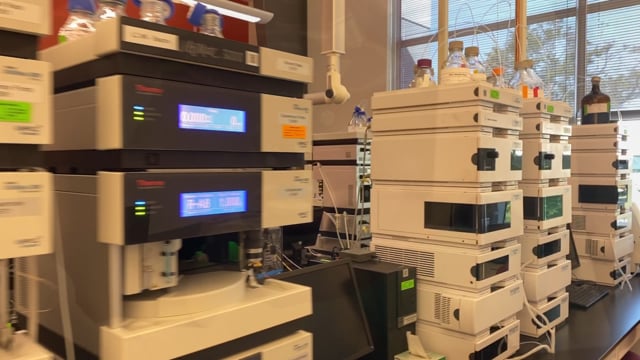
Defining Innovation in Topical Drug Product Testing
Innovation in topical drug product testing is reshaping how pharmaceutical organizations approach the development and validation of creams, ointments, gels, and other topical formulations. Traditionally, these studies have relied on a combination of manual laboratory processes, established analytical protocols, and compliance with ICH and FDA guidelines. However, the integration of new technologies—especially artificial intelligence (AI)—is driving a transformation in how data is collected, analyzed, and interpreted.
For development partners like Dow Development Labs in Petaluma, CA, innovation is not just about adopting new tools but about deploying technology strategically to improve reliability, reproducibility, and efficiency in topical drug testing. This involves:
- Leveraging data-driven insights for better decision-making during formulation, scale-up, and analytical method development
- Incorporating automation and digital tools to streamline sample handling and documentation
- Using advanced software to model stability profiles and predict product behavior under various storage conditions
- Applying machine learning algorithms to support the interpretation of complex release and permeation data
These innovations are especially valuable given the unique challenges of topical product testing—such as the need to assess drug release from semi-solid matrices, ensure homogeneity, and verify compatibility with packaging. By focusing on the careful integration of AI and related technologies, contract development organizations (CDMOs) can help clients navigate the increasing complexity of regulatory requirements and compressed development timelines. This article explores the evolving landscape of AI in topical drug testing, highlighting practical applications and key considerations for pharmaceutical and biotech stakeholders.
For further reading, see The role of artificial intelligence in drug screening, drug design, and from the National Institutes of Health.
The Role of AI in Topical Drug Testing: Concepts and Applications
The use of AI in topical drug testing is gaining traction as pharmaceutical companies seek greater accuracy and efficiency across the product development lifecycle. AI, in this context, encompasses a range of computational techniques—such as machine learning, pattern recognition, and statistical modeling—that can analyze large datasets, identify trends, and generate predictive insights.
Specific applications of AI in the topical drug testing space include:
- Data Mining and Trend Analysis: AI algorithms can rapidly evaluate historical analytical data, stability trends, and manufacturing records to flag anomalies or outliers that may indicate formulation issues or method robustness concerns.
- Automated Image Analysis: In tests like particle size measurement or skin penetration studies, AI-powered image processing tools can objectively quantify microscopic images, reducing subjectivity and variability associated with manual interpretation.
- Predictive Modeling: Machine learning models can be trained on historical stability and release data to forecast product performance under new conditions or when introducing formulation changes.
- Method Optimization: AI can assist in optimizing instrument parameters, such as those used in HPLC or IVRT (in vitro release testing), by simulating experimental outcomes and suggesting the most robust method conditions.
For example, a topical formulation’s release profile may be predicted using AI models trained on a library of similar formulations, helping scientists anticipate how excipient changes could impact drug delivery. These capabilities are designed to augment—not replace—expert scientific judgment, providing powerful tools to support decision making throughout development and analytical validation.
How AI Enhances Accuracy in Analytical Method Development
Analytical method development for topical drug products is critical for ensuring accurate quantification of active pharmaceutical ingredients (APIs), excipients, and impurities. Traditionally, this process involves iterative experimentation and manual data review. However, AI in topical drug testing is opening new pathways to enhance both speed and accuracy in method development.
Some practical examples include:
- Design of Experiments (DoE) Optimization: AI algorithms can rapidly process multivariate data from DoE studies, identifying the most influential factors affecting method performance (such as sample preparation, extraction conditions, or detection parameters).
- Peak Detection and Integration: Chromatographic analysis often requires subjective judgment in baseline assignment and peak integration. AI-powered software can standardize this process, reducing analyst-to-analyst variability and improving reproducibility.
- Outlier Detection: Machine learning models can flag atypical results in method precision or accuracy runs, prompting targeted troubleshooting and reducing the risk of method failure during validation.
At Dow Development Labs, the application of digital tools and AI-assisted data processing is designed to facilitate robust method development for topical and ophthalmic products. These approaches can help teams:
- Reduce the cycle time required for method development and optimization
- Generate statistically sound data packages that support regulatory submissions
- Improve documentation and traceability by automating data capture and report generation
Ultimately, leveraging AI in analytical method development may help reduce the risk of costly rework and ensure that analytical methods are fit-for-purpose, reproducible, and compliant with regulatory expectations.
Integrating Digital Technologies into Stability and Compatibility Studies
Stability and compatibility studies are foundational to topical drug product development, supporting the assessment of product quality, shelf life, and packaging interactions under ICH-recommended conditions. Incorporating digital technologies into these studies can streamline operations and yield more reliable results.
- Digital Data Logging: Automated monitoring of temperature, humidity, and light exposure in stability chambers provides real-time assurance of storage conditions, reducing manual recordkeeping errors.
- Electronic Laboratory Notebooks (ELNs): ELNs facilitate secure, GMP-compliant documentation of study protocols, observations, and analytical results, improving traceability and audit readiness.
- AI-Enabled Trend Analysis: By applying machine learning to stability datasets, teams can identify early indicators of degradation, visualize shelf-life projections, and optimize retest intervals.
- Remote Monitoring and Alerts: Cloud-connected sensors and software can send automated alerts to quality and operations teams if chamber conditions drift out of specification, supporting rapid intervention and minimizing data loss.
For example, integrating digital temperature and humidity sensors with centralized dashboards allows pharmaceutical and biotech teams to confirm that all samples are maintained within strict ICH guidelines throughout the study duration. AI-driven analysis of stability data can help pinpoint subtle trends—such as gradual color changes or viscosity shifts in creams—that may otherwise be missed during manual review.
At Dow Development Labs, digital integration in stability and compatibility studies is intended to support both internal and client quality systems, enabling transparent data sharing and efficient study management.
AI-Driven Automation in Topical Drug Release and Permeation Testing
Topical drug release and permeation testing—such as in vitro release testing (IVRT) and in vitro permeation testing (IVPT)—are essential for characterizing product performance and supporting regulatory submissions. These studies generate complex datasets, often involving multiple time points, replicates, and analytical endpoints. AI-driven automation is increasingly being used to manage and interpret this data more efficiently.
Key benefits and applications include:
- Automated Sample Analysis: Robotic liquid handlers and autosamplers, guided by AI-driven software, can consistently prepare, extract, and analyze samples, reducing manual handling errors and increasing throughput.
- Dynamic Data Modeling: Machine learning models can fit release data to various kinetic models (e.g., zero-order, first-order, Higuchi), automatically selecting the best fit and quantifying release rates without manual calculation.
- Pattern Recognition: AI can highlight unexpected trends or batch-to-batch variability in permeation profiles, supporting early identification of potential product or process deviations.
For instance, an AI-enabled IVRT system may process real-time UV or HPLC data to monitor cumulative drug release, instantly flagging data points that deviate from expected release kinetics. This can facilitate more agile decision-making during formulation optimization or scale-up, while maintaining the documentation required for regulatory submission.
While automation and AI are not a substitute for scientific oversight, their integration can augment laboratory workflows, reduce repetitive manual tasks, and help ensure that topical drug release and permeation data are both accurate and actionable.
Challenges and Considerations When Incorporating AI in Topical Drug Testing
Despite the promise of AI in topical drug testing, several challenges and important considerations must be addressed to deploy these tools responsibly and effectively:
- Data Quality and Integrity: AI algorithms depend on high-quality, well-structured data. Incomplete or inconsistent datasets can yield unreliable or misleading results.
- Validation and Traceability: Regulatory authorities expect that all analytical tools—including AI models—are validated for their intended use, with transparent documentation of algorithm logic and performance characteristics.
- User Training and Change Management: Successful adoption of AI tools requires adequate training for laboratory and quality personnel, as well as clear procedures for integrating new digital workflows into existing SOPs.
- Cybersecurity and Data Privacy: As data becomes more digitized and cloud-connected, organizations must implement rigorous controls to protect proprietary and patient-sensitive information.
- Regulatory Acceptance: The regulatory landscape for AI-assisted testing is still evolving, with agencies seeking assurance that AI tools do not compromise data integrity or decision making.
Addressing these challenges involves cross-functional collaboration between R&D, IT, Quality Assurance, and Regulatory Affairs teams. Development partners such as Dow Development Labs can play a pivotal role in guiding clients through the practical and compliance-related aspects of implementing AI-driven processes in topical drug product testing.
Regulatory Perspectives on AI in Topical Drug Product Testing
The integration of AI in topical drug product testing is prompting careful consideration from regulatory authorities. While there are no AI-specific FDA or EMA guidelines for analytical testing as of early 2024, regulators consistently emphasize the need for data integrity, method validation, and transparent documentation—principles that apply regardless of whether traditional or AI-enabled tools are used.
Key regulatory considerations include:
- Validation Requirements: AI-assisted analytical methods must undergo the same rigorous validation (accuracy, precision, specificity, etc.) as conventional methods, with additional emphasis on algorithm transparency and reproducibility.
- Change Control: Any updates to AI models, such as retraining algorithms with new data, should be managed through formal change control procedures and documented in the quality management system.
- Audit Readiness: Audit trails, version histories, and user access logs for AI-enabled software must be maintained to ensure traceability and support regulatory inspections.
- Risk-Based Approach: Regulators generally endorse a risk-based approach to adopting new technology, encouraging organizations to document risk assessments and mitigations related to AI implementation.
Pharmaceutical and biotech companies working with experienced development partners can benefit from shared best practices and up-to-date knowledge of regulatory trends. This collaborative approach can help ensure that the adoption of AI in topical drug testing aligns with both current and emerging expectations from global health authorities.
Preparing for the Future: How Development Partners Can Support AI-Enabled Topical Drug Testing
As the pharmaceutical industry continues to embrace digital transformation, development partners are uniquely positioned to help sponsors integrate AI in topical drug testing into their programs. Key areas where CDMOs and specialized labs can add value include:
- Evaluating and implementing validated AI-powered tools tailored to topical and ophthalmic product testing
- Providing experienced staff to guide the integration of digital technologies into analytical, stability, and release testing workflows
- Ensuring robust data management and documentation practices that meet regulatory expectations for both traditional and AI-enabled processes
- Supporting risk assessments and change management as part of broader quality system initiatives
- Offering transparent communication and technical support to address client questions about AI adoption and its impact on project timelines and regulatory submissions
Dow Development Labs remains committed to evaluating new technologies that may enhance efficiency, data quality, and decision-making in topical drug development. By fostering a collaborative partnership with clients, DDL can help bridge the gap between innovative digital tools and the rigorous standards required for pharmaceutical testing.
If your organization is seeking a responsive, knowledgeable partner to support AI-enabled topical drug testing—or to discuss how digital transformation might benefit your development program—contact Dow Development Labs in Petaluma, CA at 707-202-6965. Our team is ready to help you navigate the evolving landscape of pharmaceutical innovation with clarity and confidence.
Frequently Asked Questions
How is AI used in topical drug product testing?
AI is used to analyze large amounts of testing data, model product stability, and predict drug release profiles for creams and ointments. This helps researchers make faster, more accurate decisions during formulation and quality control.
What are the benefits of incorporating AI into topical drug testing?
AI improves the reliability and reproducibility of test results, reduces human error, and speeds up processes like sample handling and data analysis. These benefits can lead to faster product development and more consistent quality outcomes.
Can AI help predict how a topical drug will behave over time?
Yes, advanced AI software can model the stability of topical formulations and predict how they will perform under different storage conditions. This helps companies like Dow Development Labs optimize their products before they reach the market.
Is AI-based testing accepted by the FDA for topical drug products?
While AI can enhance data analysis and streamline testing, final regulatory acceptance still depends on compliance with FDA and ICH guidelines. It's important to work with experienced labs like Dow Development Labs (707-202-6965) to ensure your testing methods meet all regulatory requirements.
How can I implement AI-driven testing for my topical drug product?
Start by consulting with a lab experienced in AI and technology-driven testing, such as Dow Development Labs. They can guide you in selecting the right tools and developing a testing strategy tailored to your specific product.