
Defining Innovation in Semi-Solid Dermatology Formulations
Semi-solid dermatology innovations are driving a new era of targeted therapies and patient-centric solutions in topical and ophthalmic drug products. Traditionally, creams, gels, and ointments have been the mainstay for delivering actives directly to the skin or ocular surface. However, the limitations of basic vehicles—such as variable drug release, instability, or patient compliance challenges—have compelled formulation scientists to reimagine what’s possible. Innovation today means more than just new excipients; it encompasses advances in delivery systems, analytical techniques, and manufacturing approaches that tailor therapies for specific skin diseases and patient needs.
Recent years have seen a shift toward hybrid semi-solid systems, smarter emulsions, and advanced rheological modifiers. These developments are designed to support optimized drug release, improved residence time, and better skin tolerability. For example, the introduction of thermosensitive gels that change viscosity at skin temperature or multi-phase emulsions that enhance penetration are changing how actives reach their target. By leveraging these new technologies, semi-solid dermatology innovations are making it possible to address previously unmet needs in areas such as atopic dermatitis, psoriasis, acne, and rare skin disorders.
At Dow Development Labs, our focus is on supporting clients who seek to develop differentiated topical and ophthalmic products. By applying advanced formulation science and a solutions-oriented approach, we help advance projects from feasibility assessment through clinical supply—always with an eye toward innovation that is practical, scalable, and regulatory compliant.
Emerging Materials Reshaping Semi-Solid Drug Products
Material science lies at the heart of semi-solid dermatology innovations. The emergence of new excipients and functional ingredients is enabling more sophisticated formulations—improving drug stability, enhancing skin penetration, and supporting customized drug release profiles. Several trends are shaping the landscape:
For further reading, see topical semi from the National Institutes of Health.
- Lipid-based excipients: Novel lipid matrices can modulate drug solubilization and promote enhanced dermal absorption. These are especially useful for poorly water-soluble APIs often encountered in dermatology.
- Polymeric gelling agents: Next-generation carbomers, cellulose derivatives, and synthetic polymers allow for fine-tuning viscosity, thixotropy, and spreadability—critical for patient acceptance and dosing uniformity.
- Smart emulsifiers and surfactants: Emulsifiers that respond to pH or temperature can help stabilize challenging actives or improve release kinetics at the skin interface.
- Penetration enhancers: Compounds such as fatty acids, terpenes, and select glycols can temporarily modulate the stratum corneum to improve delivery of hydrophilic or large-molecule drugs.
For example, the use of nanostructured lipid carriers (NLCs) and solid lipid nanoparticles (SLNs) in topical gels has gained traction, offering improved API protection and controlled release. Meanwhile, hydrophilic polymers with high moisture retention properties are being incorporated in formulations for xerotic and atopic conditions, supporting both efficacy and skin barrier repair.
Dow Development Labs works closely with clients to assess the compatibility and regulatory status of novel materials, ensuring that the selected excipients are suitable for both product performance and global development strategies.
Targeted Delivery: Precision Approaches in Dermatological Therapies
One of the hallmarks of contemporary semi-solid dermatology innovations is the move toward targeted and localized drug delivery. Precision in topical therapies can mean the difference between effective treatment and systemic side effects—or between patient adherence and discontinuation.
Key approaches to targeted delivery in semi-solid formulations include:
- Microparticle and nanoparticle carriers: Encapsulating APIs within lipid or polymeric particles may help modulate release rates, protect unstable drugs, and direct actives to specific skin layers. For example, microencapsulated corticosteroids have been investigated for reduced irritation in chronic dermatoses.
- Bioadhesive gels: Gels formulated with mucoadhesive or skin-adhesive polymers can increase residence time at the application site, particularly useful in ophthalmic or mucosal indications.
- Thermosensitive and stimuli-responsive systems: Some semi-solids are designed to transition from gel to liquid (or vice versa) in response to skin temperature, pH, or ionic strength, supporting on-demand release or improved patient experience.
Clinical and preclinical data suggest that these technologies may help reduce dosing frequency, improve local tissue concentrations, and minimize off-target exposure. In practice, the choice of delivery system depends on the API’s physicochemical properties, target tissue, and intended user experience. For instance, in pediatric dermatology, ease of application and rapid absorption are critical, while in chronic plaque psoriasis, sustained action can be prioritized over cosmetic elegance.
Dow Development Labs collaborates with clients to select and optimize delivery strategies that align with both therapeutic and patient needs, leveraging a portfolio of established and emerging technologies.
Semi-Solid Dermatology Innovations: Analytical and Characterization Advances
Innovative semi-solid formulations demand equally robust analytical methodologies. Characterizing the physical, chemical, and microbiological properties of new semi-solids is integral to supporting product quality, regulatory acceptance, and successful scale-up. Analytical advances have paralleled formulation progress, providing deeper insight into product performance.
Notable analytical innovations include:
- In vitro release and permeation testing (IVRT/IVPT): These methods are now routinely used to assess drug release profiles and skin permeation, offering predictive data for in vivo performance and aiding in formulation selection.
- Advanced rheology: High-sensitivity rheometers enable detailed analysis of viscoelastic behavior, yield stress, and thixotropy, all of which impact how a product spreads, adheres, and is perceived by patients.
- Particle size and distribution analysis: Laser diffraction and dynamic light scattering are used for products containing dispersed particles or nanocarriers, supporting batch consistency and regulatory documentation.
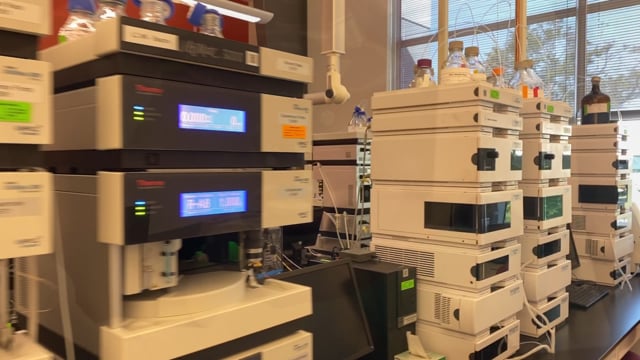
- Stability-indicating assays: Robust HPLC, GC, and mass spectrometry techniques are developed to monitor API degradation, excipient compatibility, and preservative efficacy across a range of storage conditions.
These tools allow teams to more precisely evaluate batch-to-batch uniformity, address microheterogeneity concerns, and troubleshoot scale-up issues before they impact downstream development. At Dow Development Labs, analytical development is closely integrated with formulation work, providing clients with the data needed to support regulatory filings and clinical trial supply.
Manufacturing Innovations Supporting Modern Semi-Solids
Translating semi-solid dermatology innovations from bench to batch requires manufacturing processes that are flexible, scalable, and aligned with regulatory expectations. The complexity of modern semi-solids—whether due to novel excipients, encapsulated APIs, or multi-phase systems—demands updated manufacturing strategies.
Current manufacturing innovations focus on:
- Modular mixing and homogenization: Advanced mixing technologies, such as inline homogenizers and programmable planetary mixers, are used to achieve consistent dispersion of actives and excipients, even in high-viscosity or multiphase systems.
- Closed-system processing: To address microbial risks and operator safety, closed systems with automated cleaning and sterilization cycles are increasingly adopted, particularly in ophthalmic semi-solids.
- Flexible batch sizing: Scalable equipment suites allow for rapid transition from development to clinical supply, accommodating smaller batch sizes required for early-phase studies without sacrificing process control.
- In-line and at-line analytical monitoring: Real-time monitoring of key parameters (viscosity, particle size, API content) is becoming more common, supporting Quality by Design (QbD) and reducing deviations.
Process validation and tech transfer strategies are being adapted to account for the unique challenges of semi-solid products, such as maintaining homogeneity, minimizing air entrainment, and controlling temperature-sensitive excipients. Dow Development Labs partners with clients to develop, scale, and manufacture semi-solid products under cGMP conditions, providing transparency and flexibility throughout the project lifecycle.
Regulatory Considerations for Innovative Semi-Solid Dermatological Products
Developing and registering innovative semi-solid dermatology products requires navigating a complex regulatory landscape. While regulatory authorities such as the FDA and EMA welcome innovation, they also expect robust evidence of product quality, safety, and performance—especially for non-traditional vehicles or novel excipients.
Key regulatory considerations include:
- Excipient safety and justification: Novel excipients must be supported by detailed safety data, and their use should be scientifically justified in the context of the finished product and target population.
- Demonstrating bioequivalence: For generic or 505(b)(2) pathways, comparative IVRT/IVPT and clinical studies may be required to establish equivalence to reference products, particularly for complex formulations.
- CMC documentation: Detailed description of formulation composition, manufacturing process, control strategy, and analytical methods is essential for regulatory review. This includes addressing batch uniformity and stability of multi-phase or nanocarrier-containing systems.
- Microbial and preservative efficacy: Robust antimicrobial effectiveness testing (AET) and preservative challenge studies are needed, especially for ophthalmic and pediatric indications.
Regulatory expectations continue to evolve as new technologies emerge. Sponsors are encouraged to engage with regulatory agencies early—often via pre-IND or scientific advice meetings—to clarify requirements and mitigate risk. Experienced CDMOs such as Dow Development Labs can assist with preparing and reviewing CMC documentation and support product-specific regulatory strategies.
Case Examples: Breakthroughs in Targeted Dermatological Semi-Solids
Several recent case examples highlight how semi-solid dermatology innovations are translating into targeted, patient-focused therapies:
- Lipid-based corticosteroid gels: A number of corticosteroid formulations now use lipid nanoparticles, designed to enable sustained release and reduce local irritation in chronic inflammatory skin diseases.
- Microemulsion-based antifungals: Microemulsion vehicles have enabled improved solubilization and bioavailability of poorly soluble antifungal actives, supporting more rapid symptom resolution in clinical studies.
- Polymeric ocular gels: Ophthalmic semi-solids using bioadhesive polymers have been shown to prolong drug residence on the ocular surface, reducing dosing frequency for conditions like dry eye and allergic conjunctivitis.
- Dual-phase emulgels for acne: Hybrid systems combining oil and water phases with gelling agents are being developed to deliver multiple actives with different solubility profiles, addressing complex pathophysiology in acne vulgaris.
These advances are not only broadening the range of treatable conditions, but also improving patient experience by offering more elegant, convenient, and tolerable products. Dow Development Labs has experience supporting similar projects, applying a cross-functional approach to formulation, analytical development, and cGMP manufacturing to help sponsors realize their therapeutic objectives.
Partnering for Innovation: The Role of Experienced CDMOs in Advancing Semi-Solid Therapies
Bringing innovative semi-solid dermatology products to market requires more than technical expertise—it demands an integrated partnership approach. Experienced Contract Development and Manufacturing Organizations (CDMOs) like Dow Development Labs play a vital role in bridging formulation innovation, analytical rigor, and reliable clinical supply.
When selecting a CDMO to advance semi-solid therapies, sponsors should consider:
- Technical breadth: Does the partner have demonstrated experience with a variety of semi-solid formats (creams, gels, ointments, ophthalmic gels) and a range of APIs and excipients?
- Integrated services: Are formulation, analytical, and manufacturing teams closely linked to enable seamless tech transfer and project acceleration?
- Regulatory awareness: Is there a track record of supporting CMC documentation and engaging effectively with global regulators?
- Flexibility and transparency: Can the CDMO accommodate changing project needs, batch sizes, and timelines as development progresses?
At Dow Development Labs, we are committed to supporting our clients with responsive project management, scientific insight, and a proven ability to progress topical and ophthalmic drug products from concept through clinical supply. Our collaborative model is designed to help sponsors navigate the complexities of semi-solid dermatology innovations—delivering practical solutions that move programs forward.
If you’re exploring new frontiers in semi-solid dermatology, connect with Dow Development Labs to discuss how our expertise can help advance your next program. Call us today at 707-202-6965 to start the conversation.
Frequently Asked Questions
What are semi-solid dermatology formulations and how are they different from traditional creams and ointments?
Semi-solid dermatology formulations include creams, gels, ointments, and newer hybrid systems designed for targeted drug delivery to the skin. Recent innovations use advanced emulsions and rheological modifiers for improved stability, drug release, and patient comfort compared to traditional formulas.
How do innovative semi-solid formulations improve treatment for skin conditions like eczema or psoriasis?
Innovative semi-solid formulations can provide better drug penetration, longer residence time, and enhanced tolerability, which means more effective and comfortable treatment for conditions like eczema, psoriasis, and even rare skin disorders. Ask your dermatologist about new options if current treatments aren’t working well for you.
What are thermosensitive gels in dermatology, and why are they beneficial?
Thermosensitive gels are formulations that change viscosity at skin temperature, allowing for easier application and improved drug delivery. This technology helps ensure the medication stays where it's needed and increases patient compliance.
How can I find out if a new semi-solid dermatology treatment is right for my skin condition?
Consult your dermatologist about the latest advances in semi-solid formulations. If you're developing a product or want expert guidance, you can contact Dow Development Labs at 707-202-6965 for specialized support and information.
Are semi-solid innovations suitable for sensitive skin or rare dermatological conditions?
Yes, many new semi-solid formulations are specifically designed to improve tolerability for sensitive skin and to address unmet needs in rare skin disorders. Look for products or clinical trials that highlight these features, or reach out to development labs like Dow Development Labs in Petaluma, CA for more details.