
Emerging Analytical Technologies in Topical Drug Product Testing
Topical drug product testing methods have evolved rapidly over the past decade, with advances in analytical instrumentation and techniques allowing for more precise characterization of complex formulations. For pharmaceutical and biotech organizations developing topical or ophthalmic products, staying current with these technologies is essential to meet both regulatory and clinical demands.
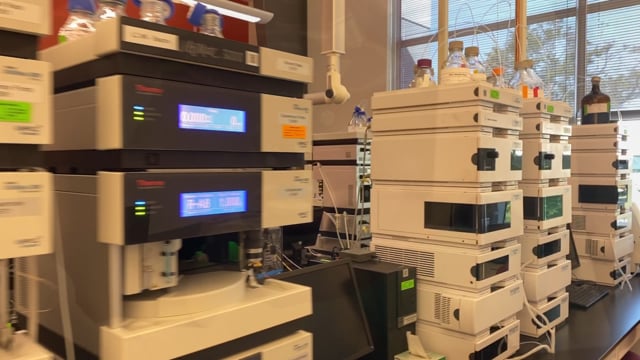
Recent years have seen growing adoption of high-resolution analytical platforms such as ultra-high performance liquid chromatography (UHPLC), mass spectrometry (MS), and advanced spectroscopy for the quantitation and identification of active pharmaceutical ingredients (APIs), excipients, and degradation products in topical formulations. UHPLC, for instance, offers improved separation efficiency and faster run times compared to traditional HPLC, making it well-suited for stability studies and batch release testing.
In addition to chromatographic advancements, spectroscopic techniques—such as Raman and Fourier-transform infrared (FTIR) spectroscopy—are increasingly used for non-destructive, real-time analysis of semi-solid dosage forms. These tools can help characterize polymorphic forms, monitor excipient interactions, and assess homogeneity within creams, ointments, and gels.
- Benefits of emerging analytical technologies:
- Increased sensitivity for trace-level impurity testing
- Reduced sample preparation requirements
- Capability to analyze complex matrices without extensive method re-development
- Support for rapid formulation screening and troubleshooting
At Dow Development Labs, our scientific team leverages these modern analytical tools to support clients’ needs from early-phase feasibility to late-stage development. By integrating the latest technologies, we aim to provide reliable data that informs formulation optimization and regulatory submissions, all while maintaining compliance with cGMP and ICH guidelines.
Novel In Vitro Release and Permeation Testing Approaches
In vitro release testing (IVRT) and in vitro permeation testing (IVPT) are foundational topical drug product testing methods, providing critical insight into how APIs are released from formulations and penetrate biological barriers. Traditionally, Franz diffusion cells have been the gold standard for both IVRT and IVPT, but recent innovations are adding new dimensions to these established workflows.
For further reading, see In Vivo Methods for the Assessment of Topical Drug Bioavailability from the National Institutes of Health.
Automation and miniaturization have driven notable advances. For example, modern diffusion cell systems now feature automated sampling, temperature control, and real-time data acquisition, enhancing throughput and reproducibility. Parallel artificial membrane permeability assays (PAMPA), while primarily used for oral absorption studies, are being adapted for certain topical scenarios where rapid, high-throughput screening is needed.
Additionally, the use of synthetic membranes with well-characterized permeability profiles allows for early discrimination of formulation performance prior to committing to human or animal skin. This can accelerate formulation selection and provide valuable data for regulatory filings, particularly when human skin availability is limited.
- Advantages of novel IVRT/IVPT approaches:
- Reduced variability and operator bias through automation
- Scalability for screening multiple formulations in parallel
- Enhanced ability to model in vivo performance in a controlled setting
- Streamlined data analysis via integrated software platforms
Dow Development Labs utilizes a range of IVRT and IVPT methodologies—customized to suit the unique properties of each formulation and API—helping clients generate robust data for product development, Q1/Q2 sameness, and comparative bioavailability submissions.
Innovative Methods for Q3 (Physicochemical and Structural) Characterization
Q3 characterization—encompassing the physicochemical and structural properties of topical drug products—has become a focal point in regulatory review and product differentiation. As agencies like the FDA and EMA emphasize the importance of demonstrating Q3 equivalence, new methods for comprehensive characterization are increasingly in demand.
Emerging approaches include advanced microscopy (e.g., polarized light microscopy, cryo-TEM) and image analysis, which allow detailed evaluation of particle size, distribution, and phase structure in emulsions, suspensions, and gels. Differential scanning calorimetry (DSC) and X-ray powder diffraction (XRPD) are commonly used to assess crystallinity and polymorphism, both of which can influence drug release and stability.
Dynamic light scattering (DLS) and laser diffraction techniques provide rapid, quantitative particle size data, supporting formulation robustness and batch-to-batch comparability. Rheological profiling, another critical method, helps characterize the viscoelastic properties and spreadability of topical products, attributes that can directly impact patient experience and clinical performance.
- Applications of innovative Q3 methods:
- Demonstrating equivalence for 505(b)(2) and ANDA pathways
- Supporting product lifecycle management and reformulation
- Evaluating the impact of manufacturing scale-up on product microstructure
- Investigating root causes of instability or out-of-specification results
A well-rounded Q3 characterization program, such as those supported by Dow Development Labs, can help development teams address regulatory inquiries efficiently and provide confidence in formulation decisions throughout the development lifecycle.
State-of-the-Art Microbiological and Preservative Effectiveness Testing
Microbiological control is crucial for the safety and quality of topical and ophthalmic drug products. Traditional compendial methods, such as USP Preservative Effectiveness Testing (PET) and USP / Microbial Enumeration and Identification, remain foundational, but new technologies are enhancing sensitivity, speed, and data integrity.
Rapid microbiological methods (RMMs)—including ATP bioluminescence, flow cytometry, and quantitative PCR—are being adopted to reduce turnaround times for routine monitoring and product release. These tools are especially valuable when time is critical, such as during clinical supply production or investigations of potential contamination events.
Automated microbial identification systems, using MALDI-TOF mass spectrometry or genotypic profiling, allow for precise and timely identification of isolates, supporting root cause analysis and corrective actions. For preservative effectiveness, newer approaches employ high-throughput microplate assays and real-time microbial growth monitoring, providing more granular insight into preservative system performance over time.
- Key benefits of state-of-the-art microbiological testing:
- Faster detection and enumeration of microbial contaminants
- Enhanced traceability and audit readiness through digital records
- Improved accuracy in preservative challenge studies
- Support for risk-based environmental monitoring programs
While traditional methods remain essential for regulatory compliance, integrating modern microbiological technologies can help organizations mitigate risks, accelerate development timelines, and maintain robust quality systems.
Integration of Automation and Digital Solutions in Topical Drug Testing Workflows
The integration of automation and digital technologies into topical drug product testing methods is transforming how laboratories operate. Automation platforms now handle tasks ranging from sample preparation and dosing to data acquisition and reporting, significantly reducing manual errors and freeing scientists to focus on data interpretation and troubleshooting.
Laboratory Information Management Systems (LIMS) and Electronic Laboratory Notebooks (ELNs) are increasingly standard, providing centralized, audit-trail-enabled repositories for analytical data. These solutions facilitate real-time collaboration between formulation, analytical, and regulatory teams—whether operating within the same facility or across global sites.
Examples of automation and digital integration include:
- Robotic liquid handlers for high-throughput IVRT/IVPT and dissolution testing
- Automated sample extraction and cleanup for chromatographic analysis
- Digital image analysis for Q3 microstructure assessment
- Cloud-based platforms for secure data sharing with sponsors and regulatory partners
Such technologies not only enhance operational efficiency but also support data integrity and compliance with regulatory expectations for electronic records (such as FDA 21 CFR Part 11). For development partners like Dow Development Labs, investing in automation and digital workflows is a strategic move to offer clients greater transparency, traceability, and responsiveness throughout the product development process.
Adapting to Evolving Regulatory Expectations for Topical Drug Product Testing
Regulatory expectations for topical drug product testing methods have grown more rigorous, reflecting advances in scientific understanding and the need for robust data to support product quality, efficacy, and safety. Agencies such as the FDA and EMA now place greater emphasis on detailed Q1/Q2/Q3 sameness data, IVRT/IVPT method validation, and comprehensive stability testing.
Recent guidance documents highlight the value of using scientifically justified, validated testing methods that are fit for their intended purpose. For example, the FDA’s draft guidances on semi-solid drug products and topical generic development outline expectations for method qualification, system suitability, and demonstration of discriminatory power for IVRT assays.
To adapt successfully, development teams should:
- Stay informed of evolving regulatory guidance and expectations for specific dosage forms and therapeutic categories
- Engage early with regulatory authorities to align on testing strategies and acceptance criteria
- Document and justify the selection and validation of both established and novel analytical methods
- Incorporate risk-based approaches to testing, focusing resources on critical quality attributes
Dow Development Labs works closely with clients to interpret current regulatory trends, design compliant testing programs, and generate data packages that support successful submissions. Proactive alignment with regulatory expectations is key to minimizing delays and addressing reviewer questions efficiently.
Challenges and Opportunities in Implementing New Testing Methods
While the adoption of new topical drug product testing methods offers significant benefits, it also presents practical challenges. Investment in new technology, staff training, and method validation are common hurdles, as is the ongoing need to demonstrate equivalence to established compendial methods for regulatory acceptance.
Common challenges include:
- High initial capital costs for advanced instrumentation
- Lengthy validation and method transfer processes
- Integrating new data streams into existing quality systems and LIMS platforms
- Regulatory uncertainty regarding acceptance of novel methods
However, the opportunities can outweigh the challenges, particularly when new technologies enable:
- More robust, reproducible, and high-throughput workflows
- Early identification of formulation or process issues
- Deeper understanding of product performance and patient impact
- Faster cycle times for analytical development and regulatory review
The key is to take a strategic, phased approach—piloting new technologies in parallel with legacy methods, gathering comparative data, and engaging proactively with regulatory authorities. Experienced partners like Dow Development Labs can help guide organizations through this process, leveraging cross-functional expertise in analytical science, quality assurance, and regulatory affairs.
Comparing Established and Emerging Topical Drug Product Testing Methods
| Testing Area | Established Methods | Emerging Technologies/Techniques | Key Considerations |
|---|---|---|---|
| Analytical Assay | HPLC, UV-Vis Spectroscopy | UHPLC, LC-MS, Raman/FTIR Spectroscopy | Emerging methods increase sensitivity and reduce run times; method validation for regulatory acceptance is critical. |
| In Vitro Release/Permeation | Manual Franz Diffusion Cells | Automated/High-Throughput Diffusion Systems, Synthetic Membranes | Automation improves throughput and reproducibility; synthetic membranes facilitate early screening. |
| Q3 Characterization | Microscopy, DSC, Rheology | Cryo-TEM, DLS, Automated Image Analysis | Advanced imaging and particle sizing provide more detailed microstructure data; supports regulatory Q3 equivalence. |
| Microbiology | USP , , Compendial Tests | Rapid Microbiological Methods, Automated Microbial ID | Rapid methods speed up results; regulatory acceptance may require bridging studies. |
| Data Management | Manual Record-Keeping, Paper Lab Notebooks | LIMS, ELN, Digital Audit Trails | Digital solutions enhance traceability, compliance, and collaboration. |
This comparison underscores that while established methods remain vital for regulatory compliance and product release, emerging technologies offer clear advantages in efficiency, data quality, and scientific insight. The optimal approach often involves a blend of both, tailored to the unique needs of each drug development program.
Ready to advance your topical drug product testing methods and accelerate development? Contact the experienced team at Dow Development Labs in Petaluma, CA at 707-202-6965 to discuss analytical strategies, regulatory support, and how our integrated services can help you stay ahead in the evolving landscape of topical drug development.
Frequently Asked Questions
What are the latest methods used for testing topical drug products?
The latest methods include ultra-high performance liquid chromatography (UHPLC), mass spectrometry (MS), and advanced spectroscopic techniques like Raman and FTIR. These technologies allow for more precise and efficient analysis of active ingredients, impurities, and formulation homogeneity.
How do UHPLC and MS improve topical drug product testing compared to older methods?
UHPLC offers faster run times and better separation of components compared to traditional HPLC, while MS provides highly sensitive and specific detection of trace impurities. Together, they enhance accuracy and efficiency in stability studies and quality control.
Can non-destructive testing methods be used for creams and ointments?
Yes, non-destructive techniques like Raman and FTIR spectroscopy are increasingly used to analyze creams and ointments in real-time. These methods help ensure uniformity and identify any chemical changes without altering the product.
Why is it important to keep up with new analytical technologies in topical drug testing?
Staying up-to-date with the latest technologies is crucial for meeting regulatory requirements and ensuring product quality. If you need guidance on implementing advanced testing methods for your topical drug products, contact Dow Development Labs at 707-202-6965.
What are the benefits of using advanced analytical techniques for topical drug product testing?
Advanced techniques provide greater sensitivity for detecting low-level impurities, require less sample preparation, and deliver faster, more reliable results. This can help accelerate product development and improve patient safety.