
Evolving Challenges in Topical Drug Formulation for Dermatology
Topical drug formulation techniques have advanced rapidly, but the dermatology sector continues to face unique and evolving challenges. Dermatology professionals must address the complexities of skin physiology, patient adherence, and variable disease presentations, all while meeting stringent regulatory expectations. The skin’s barrier function—primarily the stratum corneum—remains a significant obstacle to effective topical drug delivery, especially for molecules with low permeability or challenging physicochemical properties.
Many dermatological indications, such as psoriasis, atopic dermatitis, and acne, present with altered skin morphology and variable barrier integrity, further complicating formulation strategies. Formulators must also consider the impact of excipients on skin irritation, allergenicity, and patient acceptability. For example, ethanol and certain surfactants may enhance penetration but can also provoke irritation or dryness in sensitive patients. Additionally, there is increasing scrutiny on the use of certain preservatives, fragrances, and potential sensitizers, necessitating careful excipient selection and thorough safety assessments.
From an operational standpoint, the shift toward personalized medicine and the demand for patient-centric products have increased the need for customized topical drug formulation techniques. Regulatory agencies now expect robust evidence supporting excipient safety, batch-to-batch consistency, and product stability under various environmental conditions. For development programs seeking to differentiate their products, integrating advanced formulation science with practical manufacturing and regulatory considerations is essential. Dow Development Labs in Petaluma, CA, supports dermatology partners by helping navigate these evolving challenges with a focus on robust, scalable, and regulatory-compliant topical solutions.
For further reading, see Topical drug delivery strategies for enhancing drug effectiveness by from the National Institutes of Health.
Selection of Vehicles and Excipients: Critical Decisions in Dermatological Formulation
The choice of vehicle and excipient systems is foundational to any topical drug formulation. These selections directly impact drug solubility, stability, skin permeation, and patient experience—making them critical decisions for dermatology professionals. Vehicles range from traditional ointments, creams, and gels to more sophisticated systems such as foams and microemulsions. Each offers distinct advantages and limitations depending on the target indication, drug physicochemical properties, and patient population.
Key considerations in vehicle and excipient selection include:
- Solubilization and Stability: The vehicle must maintain the API in a stable, bioavailable form throughout the product’s shelf life. For poorly water-soluble drugs, lipidic or microemulsion-based vehicles may be beneficial.
- Skin Compatibility: Dermatological products require excipients with low irritancy and allergenic potential. Non-ionic surfactants, mild preservatives, and non-sensitizing emollients are commonly favored.
- Patient Acceptability: Texture, spreadability, absorption, and absence of odor or color are all critical for patient adherence, especially in chronic conditions.
For example, a hydrophilic gel may be preferred for acne-prone skin due to its non-comedogenic properties, while an occlusive ointment might be better suited for chronic plaque psoriasis to enhance hydration and occlusion. Dow Development Labs assists sponsors in systematically screening and selecting vehicles and excipients that align with both development and commercial objectives, leveraging compendial and novel excipients where appropriate to enable optimal performance.
Modern Topical Drug Formulation Techniques: From Microemulsions to Novel Delivery Systems
The landscape of topical drug formulation techniques now encompasses a breadth of advanced approaches designed to address drug solubilization, targeted delivery, and patient-centricity. Microemulsions, liposomal systems, and polymeric nanoparticles are among the contemporary delivery systems gaining traction in dermatological applications. Each technique offers potential advantages for overcoming the skin barrier and achieving localized or controlled release.
- Microemulsions: These thermodynamically stable systems, composed of oil, water, surfactant, and co-surfactant, enable enhanced solubilization of hydrophobic drugs and improved cutaneous penetration.
- Liposomal and Vesicular Systems: Phospholipid-based vesicles can encapsulate both hydrophilic and lipophilic APIs, potentially improving drug deposition in the viable epidermis while minimizing systemic exposure.
- Polymeric Nanoparticles: Biodegradable polymers such as PLGA may be used to create particles that modulate drug release rates and enhance stability.
- Foams and Sprays: Designed for patient convenience and improved application to large or hairy areas, these vehicles can improve adherence and dosing accuracy.
For instance, the use of microemulsion-based corticosteroid formulations has been investigated to enhance penetration in hyperkeratotic skin while minimizing irritation. Similarly, foam vehicles are now widely employed in the delivery of calcipotriene and betamethasone for scalp psoriasis, offering improved usability. Dow Development Labs works with clients to evaluate, select, and optimize these advanced topical drug formulation techniques, always considering manufacturability, scalability, and regulatory implications.
Optimizing Drug Penetration and Retention Through Formulation Strategies
Optimizing skin penetration and retention is a central goal of topical drug formulation techniques, requiring a multi-faceted approach that balances efficacy with safety. Formulation parameters such as pH, viscosity, and the inclusion of penetration enhancers are critical levers for modulating drug delivery to the intended skin layer while minimizing off-target effects.
Common strategies to optimize penetration and retention include:
- Use of Penetration Enhancers: Compounds such as fatty acids (e.g., oleic acid), alcohols, and select surfactants may temporarily disrupt the stratum corneum, increasing permeability. However, their use must be justified and balanced against irritation potential.
- pH Adjustment: The pH of a formulation can influence both drug solubility and ionization, impacting its ability to partition into the skin. For example, weakly acidic drugs may benefit from a slightly acidic vehicle to maximize non-ionized, permeable species.
- Viscosity Modulation: Thicker formulations may prolong drug residence time, potentially enhancing local action, but must remain spreadable and cosmetically acceptable.
- Encapsulation Technologies: Liposomes and polymeric carriers may help localize drug release to specific skin strata, reducing systemic absorption.
In practice, the optimization process is iterative and relies on in vitro permeation studies, skin retention assays, and, when appropriate, early clinical feedback. For example, reducing ethanol content in a retinoid gel to minimize irritation, while substituting with less aggressive co-solvents, can improve tolerability without sacrificing efficacy. Dow Development Labs employs a combination of experimental screening and analytical evaluation to support sponsors in achieving their target product profiles.
Analytical and In Vitro Techniques to Support Topical Drug Formulation
Robust analytical and in vitro evaluation is essential to the development and optimization of topical drug formulation techniques. These methodologies enable formulation teams to assess drug content, uniformity, release characteristics, and skin permeation—all critical for regulatory submission and product performance.
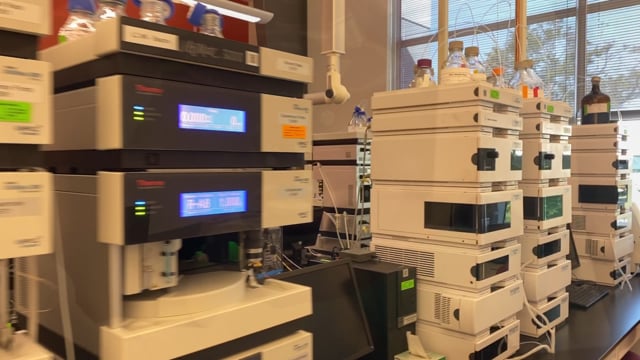
- High-Performance Liquid Chromatography (HPLC): Widely used to quantify API content, degradation products, and excipient compatibility.
- In Vitro Release Testing (IVRT): Employs synthetic membranes to evaluate the release profile of the API from the formulation, supporting batch-to-batch consistency and product comparability.
- In Vitro Permeation Testing (IVPT): Utilizes excised human or animal skin to measure API penetration, retention, and systemic exposure risk. IVPT data are increasingly important for regulatory filings, including 505(b)(2) programs.
- Rheological and Physical Characterization: Viscosity, spreadability, and particle size analyses inform both performance and manufacturability.
For example, a topical corticosteroid cream may undergo IVRT to demonstrate consistent release across pilot and registration batches, while IVPT studies help inform dosing and safety in clinical protocols. Dow Development Labs provides analytical method development, validation, and in vitro testing services to support comprehensive topical drug development programs, facilitating both early-stage candidate screening and later-stage regulatory submissions.
Addressing Stability and Packaging Compatibility for Advanced Topical Formulations
Stability and packaging compatibility are critical considerations when developing advanced topical drug products. The complexity of modern formulations—including microemulsions, liposomes, and multi-phase systems—can introduce new degradation pathways and interactions with packaging materials. Proactive stability assessment, guided by ICH and FDA expectations, is essential for ensuring product quality from development through commercialization.
Key aspects of stability and packaging evaluation include:
- Physical Stability: Monitoring for phase separation, viscosity changes, and particle growth over time under accelerated and long-term conditions.
- Chemical Stability: Assessing API degradation, excipient compatibility, and preservative efficacy, particularly in systems with high water or lipid content.
- Microbiological Stability: For aqueous or semi-solid products, preservative effectiveness and microbial limits testing are required to ensure consumer safety.
- Packaging Compatibility: Evaluating potential interactions with tubes, pumps, or airless dispensers, which may affect product integrity or dosing accuracy.
For instance, a microemulsion-based antifungal formulation may require compatibility testing with both aluminum and laminate tubes to rule out sorption or migration of excipients. Dow Development Labs offers comprehensive stability study design and packaging compatibility assessments as part of its integrated formulation services, supporting clients in meeting regulatory requirements and commercial objectives.
Regulatory and CMC Considerations in Advanced Topical Drug Formulation
The regulatory landscape for topical drug formulation techniques is increasingly complex, requiring careful attention to Chemistry, Manufacturing, and Controls (CMC) documentation. Agencies such as the FDA expect thorough characterization of product composition, manufacturing process, analytical methods, and stability data—whether for new chemical entities or 505(b)(2) reformulations.
Important regulatory and CMC considerations include:
- Quality Target Product Profile (QTPP): Defining critical quality attributes (CQAs) such as drug content, release profile, and microbiological safety early in development guides formulation and process decisions.
- Excipient Justification: Sponsors must provide detailed rationale and safety data for all excipients, particularly those used at non-standard levels or in pediatric populations.
- Analytical Method Validation: Methods for potency, impurities, and microbial testing should be validated according to ICH guidelines prior to pivotal studies and submission.
- Stability Data: Accelerated and long-term data support shelf life claims and inform labeling, while photostability and packaging studies address real-world use scenarios.
For example, a foam-based topical antibiotic intended for pediatric use may require additional excipient safety data and preservative efficacy testing. Dow Development Labs collaborates with regulatory teams to generate the data and documentation necessary for successful regulatory filings, helping sponsors anticipate and address CMC challenges throughout development.
Collaborating with Formulation Experts: Insights for Dermatology Professionals
Successful development of advanced topical drug products increasingly relies on close collaboration between dermatology professionals, formulation scientists, and regulatory experts. Early engagement with an experienced formulation partner can help anticipate challenges, accelerate development timelines, and align product attributes with clinical and commercial goals.
Dermatology professionals should look for formulation partners who offer:
- Integrated Services: End-to-end capabilities from preformulation, analytical development, and in vitro testing through to clinical supply manufacturing and packaging compatibility studies.
- Customized Approach: Willingness to tailor formulation strategies to the specific needs of each API, indication, and patient population.
- Regulatory Awareness: Deep understanding of regulatory expectations for topical products, supporting robust CMC documentation and regulatory interactions.
- Transparent Communication: Clear, ongoing dialogue with sponsors to ensure rapid issue resolution and informed decision-making.
Dow Development Labs, based in Petaluma, CA, is dedicated to supporting dermatology innovators with responsive, science-driven formulation development tailored to the demands of modern drug development. To discuss your topical drug formulation project or learn more about our advanced capabilities, contact our team at 707-202-6965. Let’s work together to bring new dermatological therapies to patients efficiently, safely, and with confidence.
Frequently Asked Questions
What are the main challenges in formulating effective topical drugs for skin conditions?
The primary challenges include overcoming the skin's natural barrier (stratum corneum), managing altered skin in conditions like psoriasis or eczema, and ensuring the drug penetrates effectively without causing irritation. Careful selection of excipients and formulation strategies is essential to balance efficacy and patient safety.
How can I improve patient adherence with topical dermatology treatments?
Focus on creating formulations that are easy to apply, non-irritating, and cosmetically acceptable to patients. Using non-greasy bases, minimizing strong odors, and reducing application frequency can all help improve adherence to treatment regimens.
Which excipients should be avoided in topical drug formulations for sensitive skin?
Common ingredients to avoid include harsh surfactants, ethanol, certain preservatives, and fragrances, as these can cause irritation or allergic reactions. Always assess patient sensitivity and conduct safety tests when developing or selecting a formulation.
How do regulatory requirements impact topical drug formulation development?
Regulators require detailed evidence on the safety and efficacy of excipients, as well as thorough safety assessments for potential irritants or allergens. Working with a specialized partner like Dow Development Labs in Petaluma, CA can help ensure your formulations meet current regulatory standards.
Where can I get expert help with advanced topical drug formulation?
If you need assistance with complex dermatology formulations, contact Dow Development Labs at 707-202-6965. Their team specializes in developing customized, patient-centric topical drugs that address both technical and regulatory challenges.