
The Science of Skin: Understanding the Target for Topical Formulas
In the world of dermatological drug development, understanding how the skin functions as a barrier and drug delivery target is fundamental. The skin’s intricate structure — composed of the stratum corneum, viable epidermis, dermis, and subcutaneous tissue — directly influences how topical products perform. Each layer poses unique challenges and opportunities for effective formulation.
The stratum corneum, the outermost layer, is often described as the principal barrier to drug penetration. It consists of dead, flattened keratinocytes embedded in a lipid matrix, frequently compared to a “brick and mortar” arrangement. This formidable barrier is why many actives, especially hydrophilic or high-molecular weight compounds, show limited permeation when simply applied to the skin surface.
Below the stratum corneum, the viable epidermis and dermis house living cells, immune components, and vasculature. Many topical agents are intended to act locally within these layers (e.g., corticosteroids for eczema) or deliver actives systemically via dermal absorption. The specific target location within the skin—whether the surface, follicles, or deeper tissues—dictates critical formulation and delivery considerations.
- Local action: Most topical dermatological drugs are designed for local effects, such as anti-inflammatories or antimicrobials.
- Systemic delivery: Fewer products, such as transdermal patches, aim for controlled systemic absorption (e.g., nicotine, fentanyl).
- Barrier repair: Some formulations focus on restoring or strengthening the skin’s barrier, as seen in ceramide-containing moisturizers.
Understanding both the anatomical and functional complexity of skin is key to developing effective topical therapies. At Dow Development Labs, a thorough appreciation of skin science underpins every stage of product development, from early formulation design to clinical material manufacturing.
How Do Topical Creams Work? Mechanisms of Drug Delivery through the Skin
“How do topical creams work?” is a question at the heart of dermatological pharmaceutical science. The mechanism of action for topical formulations hinges on their ability to deliver active pharmaceutical ingredients (APIs) across the skin’s formidable barrier to the intended site of action, while minimizing systemic exposure and adverse effects.
For further reading, see Arthritis pain: Treatments absorbed through your skin from the Mayo Clinic.
There are three main mechanisms by which APIs penetrate the skin:
- Transcellular route: The drug diffuses directly through the keratinocytes of the stratum corneum. This path requires the compound to alternate between hydrophilic and lipophilic environments, a significant challenge for most molecules.
- Intercellular route: The API migrates through the lipid-rich spaces between keratinocytes. This is the predominant pathway for most dermatological drugs, particularly lipophilic molecules with moderate molecular weight (typically <500 Da).
- Appendageal route: Some molecules bypass the stratum corneum via hair follicles and sweat glands. While this represents a minor fraction of total skin surface area, it may be significant for certain drugs or nanocarrier-based formulations.
The effectiveness of a topical cream depends on careful consideration of these pathways, as well as the physicochemical properties of the API (e.g., lipophilicity, molecular size, charge). For example, tacrolimus ointments for atopic dermatitis are formulated to optimize penetration via the intercellular lipid route, while minimizing systemic bioavailability.
Formulation scientists must also consider factors such as occlusion, hydration, and excipient selection, all of which can modulate skin permeability. By designing topical products that align with the skin’s unique biology, development partners like Dow Development Labs support clients in creating formulations with optimized drug delivery profiles.
Formulation Science: Key Components of Effective Topical Dermatological Products
Crafting a successful topical product is a complex process that involves balancing API properties, excipient functionality, and targeted skin delivery. Unlike oral or injectable drugs, topical creams must be engineered not only for efficacy but also for cosmetic acceptability and patient compliance—attributes that can make or break a product’s clinical and commercial success.
Key formulation components include:
- API selection and solubilization: The solubility and stability of the active ingredient within the formulation matrix are foundational for both bioavailability and shelf life. For example, poorly soluble APIs may require micronization or solubilizing agents to achieve the desired drug concentration.
- Vehicle/base: Creams, ointments, gels, and lotions all utilize different ratios of water, oil, and emulsifiers. The choice of base can dramatically affect drug release, skin feel, and user experience.
- Emulsifiers and surfactants: These help stabilize oil-in-water or water-in-oil emulsions, influencing both the delivery of actives and product stability. Selection is based on compatibility with the API and overall formulation.
- Penetration enhancers: Ingredients such as ethanol, propylene glycol, or specific fatty acids may be used to disrupt the stratum corneum and promote drug diffusion. Their use requires careful safety and regulatory evaluation.
- Preservatives and antioxidants: Given the risk of microbial contamination and oxidative degradation, inclusion of suitable preservatives (e.g., parabens, phenoxyethanol) and antioxidants is often necessary for multi-dose topical products.
Real-world example: In the development of clobetasol propionate creams, careful adjustment of oil-to-water ratio, emulsifier selection, and inclusion of penetration enhancers can significantly alter both bioavailability and patient tolerability. At Dow Development Labs, these formulation variables are systematically studied and optimized to support robust product performance and regulatory submission.
Optimizing Penetration: Strategies to Enhance Skin Absorption
Maximizing API delivery through the skin—without compromising safety or tolerability—is a central challenge in topical drug development. Several formulation strategies are commonly employed to enhance penetration, each tailored to the specific properties of the drug and the intended therapeutic effect.
- Use of chemical penetration enhancers: Solvents like ethanol or propylene glycol disrupt the lipid bilayers of the stratum corneum, increasing permeability. While effective for many APIs, these agents can also irritate sensitive skin, so their inclusion must be judicious and evidence-based.
- Encapsulation technologies: Liposomes, microemulsions, and nanoparticles can be used to encapsulate APIs, improving both penetration and stability. For example, liposomal formulations of corticosteroids have been shown to enhance dermal delivery compared to conventional creams.
- Optimized particle size: Reducing API particle size (micronization or nanonization) increases surface area, which may improve dissolution and absorption rates within the skin’s microenvironment.
- Occlusive vehicles: Ointments or patches that create an occlusive barrier can increase skin hydration, swelling the stratum corneum and facilitating drug diffusion. This approach is commonly used in products like transdermal fentanyl patches.
- pH adjustment: The ionization state of many APIs is pH-dependent; adjusting formulation pH can optimize the proportion of unionized, more permeable molecules.
Each penetration enhancement strategy must be rigorously evaluated for its impact on efficacy, safety, and patient acceptability. At Dow Development Labs, formulation teams collaborate with clients to design products that leverage these strategies while maintaining regulatory and clinical requirements.
Stability and Compatibility: Preserving Efficacy from Development to Use
Ensuring the long-term stability and compatibility of topical drug products is essential for both efficacy and patient safety. Many APIs and excipients are sensitive to environmental factors such as light, temperature, and moisture. Degradation or phase separation can lead to reduced potency, altered pharmacokinetics, or increased risk of irritation.
Key considerations in topical product stability include:
- API-excipient compatibility: Chemical or physical interactions between the API and other formulation components can lead to degradation, precipitation, or changes in drug release profile.
- Microbial stability: Water-containing formulations are at risk for microbial contamination. Effective preservatives are critical, and preservative efficacy testing (PET) is a standard part of product development.
- Physical stability: Creams and emulsions must resist phase separation, crystallization, or viscosity changes over time and under various storage conditions.
- Packaging compatibility: Some APIs or excipients may interact with container-closure systems, leading to leaching, absorption, or loss of product integrity.
Stability-indicating analytical methods are used to monitor these parameters throughout development and shelf-life studies, following ICH guidelines. For example, a topical retinoid formulation may require protection from light and oxygen, necessitating both antioxidant inclusion and specialized packaging. Dow Development Labs routinely designs and executes stability protocols to support regulatory submissions and commercial readiness.
Analytical Testing: Measuring Effectiveness in Topical Formulations
Analytical testing is the cornerstone of topical drug development, providing objective data on product quality, potency, and performance. The unique challenges of topical products—including heterogeneous matrices, complex release profiles, and variable skin absorption—demand robust, validated analytical methods.
Common analytical methodologies include:
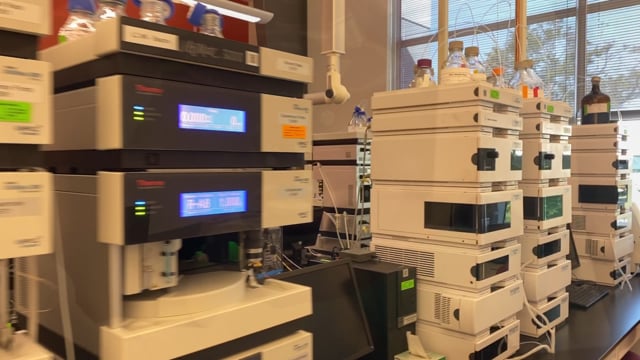
- Assay and content uniformity: High-performance liquid chromatography (HPLC) or other quantitative techniques are used to confirm API content and distribution throughout the batch.
- In vitro release testing (IVRT): Simulates drug release from the formulation into a synthetic membrane; used to assess batch-to-batch consistency and guide formulation optimization.
- In vitro permeation testing (IVPT): Measures the rate and extent of API diffusion across excised human or animal skin, providing critical data on “how do topical creams work” at the mechanistic level.
- Rheology and viscosity profiling: Evaluates product spreadability and stability, which impact both patient experience and drug delivery.
For example, a generic topical corticosteroid must demonstrate comparable IVRT and IVPT profiles to the reference product for regulatory approval under the 505(j) pathway. Dow Development Labs supports clients with a suite of analytical services tailored to topical and ophthalmic products, facilitating data-driven development from early-stage research through commercial launch.
Regulatory Perspectives: What Defines an ‘Effective’ Topical Drug Product?
From a regulatory standpoint, an “effective” topical drug product is one that consistently delivers the API at the intended rate and extent to the target tissue, while maintaining safety, stability, and quality. Both FDA and EMA require comprehensive data packages to demonstrate that a topical formulation meets these standards.
Key regulatory expectations include:
- Quality attributes: Purity, potency, and microbiological safety must be established through validated methods.
- Bioavailability and bioequivalence: For generic products, IVRT and IVPT data—sometimes supplemented by clinical endpoint studies—are required to show equivalence to the reference listed drug.
- Stability data: Long-term and accelerated stability studies per ICH guidelines are needed to support product shelf life and labeling.
- CMC documentation: Detailed chemistry, manufacturing, and controls (CMC) sections must address formulation rationale, manufacturing process, analytical methods, and packaging compatibility.
For innovative products (505(b)(2) pathway), additional clinical data may be required to establish safety and efficacy, depending on the extent of formulation changes or new indications. Regulatory agencies increasingly emphasize data integrity, patient-centric design, and robust risk management throughout the product lifecycle. Dow Development Labs partners with clients to prepare regulatory-ready documentation and supports effective communication with health authorities.
From Concept to Clinic: Translating Scientific Insight into Successful Topical Formulas
Transforming a topical drug concept into a clinically successful product is a multidisciplinary effort that spans formulation science, analytical development, manufacturing, and regulatory navigation. Each stage benefits from a deep understanding of “how do topical creams work” at both the molecular and practical levels.
Key steps in the development journey include:
- Preformulation assessment: Evaluation of API properties, including solubility, stability, and permeability, to inform formulation strategy.
- Prototype formulation and screening: Iterative development of multiple prototypes, tested for release, stability, and skin compatibility.
- Analytical method development: Establishment of robust, validated methods for content, purity, and performance testing.
- Scale-up and manufacturing: Transition from bench-scale to clinical or commercial batch production under cGMP conditions.
- Clinical supply preparation: Packaging and labeling of clinical trial materials to support human studies.
- Regulatory submission and lifecycle management: Compilation of CMC and clinical data for regulatory review, post-approval changes, and ongoing product support.
Throughout this process, experienced development partners like Dow Development Labs offer invaluable support by integrating scientific, operational, and regulatory expertise. Their collaborative approach helps biotech, pharma, and academic innovators move topical drug candidates efficiently from concept to the clinic, minimizing risk and aligning with industry best practices.
Ready to advance your topical or ophthalmic drug program? Contact Dow Development Labs in Petaluma, CA today at 707-202-6965 to discuss how our integrated development services can help bring your vision to life.
Frequently Asked Questions
How do topical creams actually work on the skin?
Topical creams work by delivering active ingredients directly to the targeted layers of your skin—most often for local effects like reducing inflammation or fighting bacteria. The cream is designed to penetrate the outer layer (stratum corneum) and reach the specific area where the medication is needed.
Why do some topical creams not seem to absorb or work well?
The outermost skin layer, the stratum corneum, acts as a strong barrier, especially against water-based or large-molecule ingredients. For best results, apply creams as directed on clean, slightly damp skin, and consider consulting with skincare professionals like Dow Development Labs (707-202-6965) for guidance on product selection.
Can topical creams reach deep enough to treat conditions below the skin surface?
Most topical creams are formulated to act locally within the outer and middle layers of the skin, not deep tissues. For deeper or systemic effects, specialized products like transdermal patches are used, and these require advanced formulation techniques.
How can I make sure my topical cream is working effectively?
Follow the product instructions carefully and apply to clean skin to maximize absorption. If you’re unsure about your product’s effectiveness, consult with your dermatologist or reach out to experts at Dow Development Labs for personalized advice.
Are there ways to improve how well topical creams penetrate the skin?
Yes, using gentle exfoliation, applying to slightly damp skin, or using products with penetration enhancers can help. Always check with a dermatologist before changing your routine to avoid irritation or adverse effects.