
Defining the Potential of Topical Drug Delivery in Dermatology
Topical drug delivery advancements have redefined how dermatological therapies are developed, formulated, and administered. Unlike systemic drug delivery, topical formulations are designed to deliver active pharmaceutical ingredients (APIs) directly to affected skin sites, targeting local tissue and minimizing systemic exposure. This approach is especially valuable in dermatology, where diseases such as psoriasis, eczema, acne, and localized infections require precise, site-specific treatment. In recent years, the potential of topical drug delivery in dermatology has expanded considerably, driven by innovations in both formulation science and drug delivery technologies.
Topical products can take many forms, including creams, ointments, lotions, gels, and more advanced vehicles such as foams and sprays. Each dosage form presents unique advantages and challenges in terms of drug penetration, patient adherence, and commercial scalability. The critical goal remains consistent: to maximize therapeutic efficacy while minimizing irritation, toxicity, and inconvenience for patients. With regulatory focus increasing on product quality, consistency, and safety, the role of robust formulation and analytical strategies becomes even more vital.
At Dow Development Labs, we recognize that the full potential of topical drug delivery lies not only in effective APIs, but in the ability to design, test, and manufacture formulations that meet the evolving needs of both patients and developers. This article explores the latest topical drug delivery advancements, highlighting how innovation in this space is shaping dermatological care and commercial success.
For further reading, see Recent advances and future prospective of topical and transdermal from frontiersin.org.
Breakthroughs in Dermatological Formulation Science
The science of dermatological formulation has seen significant progress, enabling the development of products with enhanced performance, user acceptability, and regulatory compliance. Core to these breakthroughs are advances in excipient technology, drug solubilization, and skin permeation enhancers. For example, modern emulsifiers and gelling agents can help stabilize complex APIs and improve the consistency and spreadability of topical formulations. Additionally, encapsulation techniques, such as liposomes and microemulsions, are being studied for their ability to improve drug delivery to targeted skin layers.
One of the most impactful developments has been the customization of formulations for specific dermatologic indications. For instance, corticosteroid creams tailored for chronic plaque psoriasis may utilize occlusive bases to enhance skin penetration, while formulations for acne often prioritize non-comedogenic and fast-absorbing vehicles. The ability to fine-tune viscosity, pH, and sensorial attributes allows for products that are both effective in drug delivery and acceptable to patients, supporting better adherence and clinical outcomes.
Furthermore, the integration of quality-by-design (QbD) principles and risk-based approaches in formulation development is helping teams identify critical quality attributes early, reducing development time and supporting regulatory submissions. Dow Development Labs applies these principles to assist clients in designing and optimizing formulations that are robust throughout the product lifecycle.
Innovative Topical Drug Delivery Systems: From Gels to Nanotechnology
The evolution of topical drug delivery systems has introduced a diverse array of vehicles, each offering unique benefits for the delivery of active ingredients. These systems are tailored to address the diverse requirements of APIs, patient populations, and therapeutic goals. Key innovative topical drug delivery systems include:
- Creams and Ointments: Traditional vehicles with customizable oil-to-water ratios, supporting a range of hydrophilic and lipophilic drugs.
- Gels: Water-based or hydroalcoholic systems designed for rapid absorption and minimal residue, suitable for conditions like acne and scalp psoriasis.
- Foams and Sprays: Metered-dose systems that can improve ease of application, especially for large or hairy areas, and enhance patient adherence.
- Microspheres and Liposomes: Encapsulation platforms aiming to enhance drug stability, protect sensitive APIs, and provide sustained release at the site of action.
- Microneedle Patches: Emerging devices that create microchannels in the skin, facilitating deeper delivery of large molecules or poorly permeable drugs.
- Nanoemulsions and Nanoparticles: Submicron carriers designed to enhance solubility, improve penetration, and potentially enable the delivery of biologics or poorly soluble drugs.
- Transdermal Patches: Systems that provide controlled, sustained release of drugs over extended periods, often used for pain management or hormone therapy.
These innovations are not only expanding the types of drugs that can be delivered topically but are also influencing the regulatory landscape and the expectations for product performance and quality.
Topical Drug Delivery Advancements: Impact on Product Performance and Patient Experience
Topical drug delivery advancements are directly influencing both the effectiveness of dermatological products and the daily experience of patients. Enhanced penetration technologies, for example, can help increase the bioavailability of APIs in targeted skin layers, potentially reducing the frequency or amount of application needed. This is particularly relevant for patients managing chronic conditions, where ease of use and comfort are critical for long-term adherence.
Improved formulation aesthetics—such as non-greasy feel, rapid absorption, and minimal residue—can help minimize treatment abandonment, a common challenge in dermatology. Patient-centric design now routinely includes sensory testing and human factor studies early in development, ensuring that the final product is not only efficacious but also practical for real-world use.
On the product performance front, advanced vehicles such as nanoemulsions or encapsulated delivery systems may help maintain drug stability, control release profiles, and reduce unwanted side effects like irritation or systemic absorption. The end result is a more predictable and manageable patient experience, with potential benefits for clinical outcomes and product differentiation in a competitive market.
Topical drug delivery advancements are also shaping how products are evaluated in the clinic, with increased use of pharmacokinetic modeling and in vitro permeation studies to support development and regulatory review. These capabilities are central to the service offerings at Dow Development Labs, where product performance and patient experience are integral to every development program.
Analytical and Stability Challenges in Advanced Dermatological Formulations
The increasing complexity of topical drug formulations presents significant analytical and stability challenges. Advanced vehicles—such as nanoemulsions, liposomal carriers, and multi-phase systems—often require specialized analytical methods to accurately characterize particle size, drug distribution, and release kinetics. Traditional assays may be insufficient for assessing the uniformity or stability of these complex systems.
Stability testing is particularly critical, as topical products must maintain consistent performance, appearance, and safety throughout their shelf life. Factors such as temperature, humidity, light exposure, and packaging interactions can influence drug degradation, phase separation, or changes in rheological properties. For example, the stability of a topical gel containing a volatile solvent may differ dramatically from that of an ointment, requiring tailored protocols for each product type.
Analytical method development often includes:
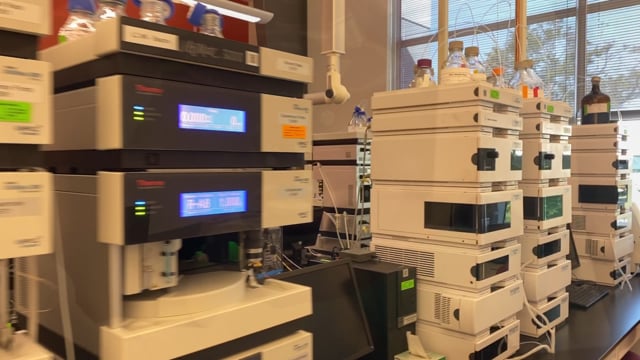
- HPLC and GC assays for API and preservative quantification
- Particle size analysis for nanoformulations
- In vitro release and permeation testing (IVRT/IVPT)
- Assessment of physical properties such as viscosity, pH, and spreadability
Dow Development Labs routinely supports clients with customized analytical and stability programs, designed to meet regulatory expectations and provide robust data for both development and commercial stages.
Regulatory Perspectives on Advancing Topical Drug Products
Regulatory agencies continue to refine their expectations for topical drug products, emphasizing the importance of product quality, consistency, and patient safety. The U.S. Food and Drug Administration (FDA), for example, has issued guidance on topical bioavailability, quality-by-design, and the use of in vitro release and permeation testing in support of ANDA or 505(b)(2) submissions.
Topical drug delivery advancements have prompted regulators to require more comprehensive characterization of drug release, skin penetration, and batch-to-batch consistency. For complex formulations, including those utilizing nanotechnology or novel excipients, additional data may be needed to demonstrate equivalence to reference products or to support new drug applications. This includes robust analytical validation, stability data, and sometimes human pharmacokinetic or pharmacodynamic studies.
Key regulatory considerations for advanced topical products include:
- Demonstrating consistent drug delivery and product performance over the intended shelf life
- Addressing the safety and compatibility of novel excipients or delivery systems
- Applying appropriate in vitro and in vivo evaluation methods to support claims
- Ensuring manufacturing processes comply with cGMP and quality standards
Expertise in regulatory strategy and documentation is essential for navigating these evolving requirements. Development partners, such as Dow Development Labs, provide regulatory support as part of an integrated approach to topical drug development, helping teams anticipate and address potential challenges early in the process.
Real-World Applications: How Topical Drug Delivery Advancements Are Shaping Clinical and Commercial Programs
The impact of topical drug delivery advancements is evident in both clinical and commercial settings. Pharmaceutical and biotech companies are leveraging new formulation technologies to address unmet needs in dermatology—whether by improving drug tolerability, enabling new indications, or extending product lifecycles through differentiated delivery systems.
Examples of real-world applications include:
- Reformulation of Existing APIs: Companies have developed new topical gels or foams for established molecules, such as corticosteroids or antifungals, to improve patient experience and adherence.
- Enabling Novel Molecules: Advanced encapsulation or nanoemulsion systems are being explored for the topical delivery of large or poorly soluble molecules, including peptides and biologics.
- Personalized Dermatology: Compounded and customizable formulations are increasingly used to meet specific patient needs, reflecting a trend toward precision medicine in skin care.
- Lifecycle Management: Modified release and combination products using innovative platforms can help extend the commercial viability of branded therapies in competitive markets.
Dow Development Labs has supported a range of programs across the development continuum, providing formulation, analytical, and clinical supply services tailored to the unique demands of topical products. The growing adoption of advanced delivery systems highlights the importance of an integrated approach—one that combines technical expertise with a deep understanding of regulatory and commercial realities.
Partnering for Success: The Role of Specialized CDMOs in Advancing Topical Drug Delivery
As the landscape for topical drug delivery becomes more complex, the role of specialized contract development and manufacturing organizations (CDMOs) is increasingly vital. Experienced CDMOs bring together multidisciplinary expertise in formulation science, analytical testing, stability, regulatory strategy, and cGMP manufacturing—creating a seamless pathway from concept to clinic and beyond.
Key advantages of partnering with a specialized CDMO, such as Dow Development Labs, include:
- Access to a team with deep experience in topical and ophthalmic drug product development
- Integrated services covering formulation design, analytical method development, stability studies, and clinical supply manufacturing
- Flexible, responsive project management tailored to the needs of small and mid-sized pharma and biotech clients
- Support for a range of program types, from early feasibility studies to registration and commercial manufacturing
- Commitment to quality systems and regulatory compliance aligned with industry standards
Collaboration with a specialized CDMO can help de-risk development programs, streamline timelines, and provide the technical and regulatory support needed to navigate the evolving requirements of topical drug delivery advancements. For companies seeking to bring innovative dermatological products to market, the right partner can make a significant difference in both development efficiency and commercial outcomes.
Ready to advance your topical drug product? Contact Dow Development Labs in Petaluma, CA at 707-202-6965 to discuss how our integrated development and manufacturing services may help support your dermatology program. Our team is dedicated to providing responsive, expert guidance for every stage of your topical drug delivery journey.
Frequently Asked Questions
What are the latest advancements in topical drug delivery for skin conditions?
Recent advancements include the development of novel formulations like foams, sprays, and gels that improve drug penetration and patient comfort. These technologies help deliver medication more effectively to targeted skin layers while reducing side effects.
How do topical drug delivery systems improve treatment for dermatological diseases?
Topical delivery systems target medication directly to affected skin areas, which can enhance therapeutic outcomes and minimize systemic exposure and side effects. This precision makes them especially valuable for conditions like psoriasis, eczema, and acne.
What should I consider when choosing a topical formulation for my skin condition?
Consider factors like the affected area, skin type, and desired absorption speed. Consulting with dermatology experts, such as those at Dow Development Labs in Petaluma, CA, can help you select the most effective and comfortable formulation for your needs.
Are advanced topical formulations safe for long-term use?
Many advanced topical formulations are designed to minimize irritation and toxicity, but safety can depend on the specific drug and your skin's sensitivity. Always follow your healthcare provider’s instructions and report any adverse reactions promptly.
How can I get more information about topical drug development services?
You can contact Dow Development Labs at 707-202-6965 to discuss formulation development, testing, and manufacturing services tailored to dermatological products.