
Expert Overview: The Evolving Landscape of Topical Drug Delivery Methods
Topical drug delivery methods have significantly advanced over the past decade, reflecting a growing need for targeted, patient-friendly, and efficient treatments. The traditional landscape—dominated by creams, ointments, and gels—has expanded to encompass a wider variety of vehicles and technologies designed to enhance skin penetration, improve drug stability, and optimize patient compliance. Pharmaceutical and biotech companies are increasingly exploring innovative approaches for both dermatologic and ophthalmic indications, driven by the complexities of active pharmaceutical ingredient (API) characteristics and the demand for differentiated products.
At Dow Development Labs in Petaluma, CA, our teams have observed that the selection of topical drug delivery methods is rarely straightforward. The interplay between API solubility, skin barrier properties, and formulation excipients necessitates a tailored approach for each new product candidate. For instance, while conventional emulsion systems remain prevalent for their manufacturability and stability, there is rising interest in technologies such as lipid-based carriers, nanosuspensions, and novel semi-solid systems that may help address the challenges of poor skin penetration or variable bioavailability.
Regulatory expectations have also evolved, with agencies paying closer attention to systemic absorption, local tolerability, and product performance under real-world conditions. This places additional emphasis on robust analytical studies and in vitro release testing, which are now central to topical drug product development. As the field matures, the integration of advanced formulation science, cutting-edge analytical methods, and comprehensive stability assessments is reshaping the future of topical drug delivery methods and offering new opportunities for product differentiation.
Emerging Formulation Strategies for Enhanced Skin Penetration
One of the central challenges in topical drug delivery methods is achieving efficient and reproducible skin penetration without compromising safety or stability. Recent advances in formulation science are opening new avenues for overcoming the formidable barrier presented by the stratum corneum. Strategies under investigation and development include the use of permeation enhancers, lipid-based carriers, and nanoscale delivery systems, each with unique advantages and technical considerations.
For further reading, see Topical drug delivery strategies for enhancing drug effectiveness by from the National Institutes of Health.
Permeation enhancers such as fatty acids, surfactants, and ethanol derivatives are widely used to temporarily modify the skin barrier and facilitate drug transport. While their use must be carefully balanced to avoid irritation, they remain a mainstay for APIs with limited inherent permeability. Lipid-based systems like microemulsions and solid lipid nanoparticles are gaining traction for their ability to encapsulate hydrophobic drugs and potentially enhance deposition within the skin layers. For example, microemulsions have been reported to improve the solubility and delivery of poorly water-soluble corticosteroids, supporting more consistent local exposure.
Nanosuspensions and nanoparticle formulations are increasingly considered for topical use due to their high surface area and potential for controlled release. These systems can be tailored for specific APIs, offering a degree of flexibility in addressing different physicochemical properties. Other emerging approaches include the use of prodrugs—where the API is chemically modified for better skin penetration before enzymatic conversion in situ—and polymeric film-formers that create occlusive layers to enhance absorption.
At Dow Development Labs, our formulation scientists work closely with clients to evaluate the suitability of these advanced strategies, applying a combination of in vitro and ex vivo skin models to inform early formulation decisions. This collaborative, data-driven approach helps identify the most promising techniques for enhanced topical drug delivery while mitigating development risks.
Advanced Analytical Techniques Supporting Topical Product Optimization
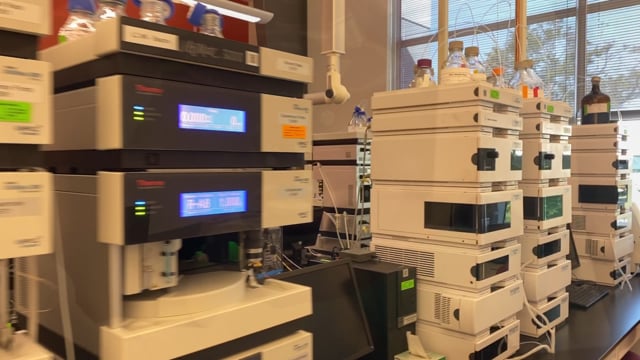
As topical drug products become more complex, the role of advanced analytical techniques in development has never been more critical. Analytical testing is central to characterizing drug release, penetration, and stability—parameters essential for both regulatory submissions and product performance. Modern approaches leverage a combination of traditional and innovative methodologies to build a comprehensive understanding of formulation behavior.
In vitro release testing (IVRT) and in vitro permeation testing (IVPT) are now standard tools for evaluating drug diffusion from semi-solid and liquid formulations. IVRT provides insight into the release kinetics of the API from the dosage form, while IVPT using human or animal skin models assesses the degree of skin penetration under controlled conditions. These techniques are increasingly expected by regulatory agencies to demonstrate equivalence or superiority versus reference products, especially for generic development under the 505(b)(2) pathway.
Other advanced analytical approaches include:
- Rheological profiling: Assessing the viscoelastic properties of creams and gels, which can influence patient acceptability and dose uniformity.
- Particle size analysis: Critical for nano- and micro-particulate systems where particle size affects both stability and bioavailability.
- Advanced microscopy: Techniques such as confocal laser scanning microscopy enable visualization of drug distribution within skin strata.
Dow Development Labs incorporates these advanced analytical methods as part of an integrated development program, providing formulation teams with the data needed to make informed optimization decisions. This not only supports regulatory compliance but also helps differentiate products in an increasingly crowded market.
Novel Semi-Solid and Liquid Dosage Forms: Expanding the Topical Toolbox
The landscape of topical drug delivery methods now encompasses a diverse array of semi-solid and liquid dosage forms, each designed to address specific formulation and clinical needs. In addition to traditional ointments and creams, developers can now consider innovative formats that may offer unique advantages in terms of drug delivery, patient experience, and market positioning.
- Microemulsions: Thermodynamically stable mixtures of oil, water, surfactant, and co-surfactant. Microemulsions are valued for their clarity, low viscosity, and ability to solubilize both hydrophilic and lipophilic APIs.
- Hydrogels: Crosslinked polymer networks that can provide controlled drug release and a cooling sensation upon application. Hydrogels are particularly useful for water-soluble drugs and may enhance patient comfort.
- Foams: Pressurized or pump-dispensed foams can provide a light, easily spreadable vehicle. Foams are commonly used for scalp or hair-bearing areas where traditional creams may be less convenient.
- Sprays: Metered-dose or pump sprays are increasingly popular for their ease of use and ability to deliver uniform doses across larger surface areas.
- Film-forming solutions: These formulations dry upon application to create a thin, occlusive layer that may improve drug residence time and penetration.
- Nanosuspensions: Sub-micron particle dispersions designed to increase surface area and dissolution rates for poorly soluble drugs.
Each dosage form presents unique formulation and manufacturing challenges, including viscosity control, API stability, and packaging compatibility. Through careful selection and optimization, it is possible to align the choice of dosage form with the therapeutic target, patient preferences, and commercialization strategy. Dow Development Labs routinely evaluates these novel dosage options as part of its comprehensive service offering, helping clients navigate the expanding topical toolbox.
Integration of Packaging Compatibility and Stability in Innovative Topical Drug Delivery
As new topical drug delivery methods introduce novel excipients and dosage forms, ensuring compatibility and long-term stability within primary packaging becomes increasingly complex. Packaging materials—whether tubes, pumps, bottles, or unit-dose containers—can interact with formulation components, potentially affecting product quality, shelf-life, and safety.
During development, early packaging compatibility studies are essential. These studies may involve exposing the formulation to candidate packaging materials under accelerated and real-time conditions, monitoring for changes in appearance, pH, viscosity, and API content. For example, some semi-solid formulations containing certain surfactants or oils may extract plasticizers from packaging components, leading to discoloration or physical instability.
Stability studies, performed in accordance with ICH guidelines, are also critical for supporting regulatory submissions. These studies evaluate the product under various storage conditions to ensure that efficacy and safety are maintained throughout the intended shelf life. For innovative dosage forms—such as foams or film-forming solutions—additional considerations may include propellant compatibility or film integrity over time.
Dow Development Labs emphasizes the integration of packaging compatibility assessments and comprehensive stability testing throughout the development lifecycle. By identifying and resolving packaging-related issues early, developers can reduce the risk of late-stage setbacks and help facilitate a smoother path to commercialization.
Ophthalmic Delivery: Specialized Innovations in Topical Administration
Ophthalmic drug products represent a specialized area within topical drug delivery methods, with unique formulation, analytical, and regulatory challenges. The ocular surface is highly sensitive and protected by multiple physiological barriers, necessitating the development of safe, sterile, and well-tolerated formulations. Recent innovations in ophthalmic delivery are focused on enhancing local drug bioavailability while minimizing systemic exposure and dosing frequency.
Key advancements include:
- In situ gelling systems: Liquid formulations that gel upon contact with the ocular surface, prolonging residence time and potentially improving therapeutic outcomes.
- Nanoparticle suspensions: Designed to increase drug solubility and retention in the precorneal area, these systems can be tailored for both hydrophilic and lipophilic APIs.
- Preservative-free multidose packaging: Responding to concerns about preservative-induced toxicity, new packaging technologies allow for sterile delivery without the need for traditional preservatives.
Analytical testing for ophthalmic products often includes rigorous evaluation of sterility, particulate content, and viscosity, in addition to standard stability and drug release studies. Formulation teams must also consider patient comfort, drop size consistency, and compatibility with contact lenses or post-surgical eyes.
Dow Development Labs supports ophthalmic development programs with a suite of formulation and analytical capabilities, applying proven approaches to address the specific challenges of ocular drug delivery. By leveraging these innovations, companies can develop differentiated ophthalmic products that meet both patient and regulatory expectations.
Regulatory Considerations for Implementing Innovative Topical Drug Delivery Methods
Bringing a novel topical drug product to market requires careful navigation of the regulatory landscape. Agencies such as the FDA and EMA have established guidelines for the development, characterization, and approval of topical products, with particular scrutiny applied to new drug delivery methods and excipient systems. Developers must demonstrate that innovative approaches do not compromise safety, efficacy, or quality, and that any changes versus reference products are scientifically justified.
Key regulatory considerations include:
- Demonstrating bioequivalence: For generic and 505(b)(2) products, comparative in vitro and clinical studies may be required to establish bioequivalence, particularly if the delivery method differs from the reference listed drug.
- Excipient safety and precedent: The use of novel excipients or untested concentrations may trigger additional toxicology or clinical studies, as well as more intensive regulatory review.
- Analytical method validation: All analytical methods used to support product development and release must be validated in compliance with ICH and cGMP requirements.
- Stability and packaging: Comprehensive stability data, including packaging compatibility results, are required to define shelf life and storage conditions.
Regulatory agencies are increasingly open to innovative topical drug delivery methods, provided that robust scientific data supports the proposed approach. Early and transparent communication with regulatory authorities, combined with a risk-based development strategy, can help streamline the approval process. Dow Development Labs collaborates with clients to design and execute development programs aligned with applicable regulatory guidance, supporting efficient and compliant advancement of topical and ophthalmic products.
Practical Guidance: Selecting and Implementing Advanced Topical Drug Delivery Methods
Choosing the right topical drug delivery method is a critical decision that can influence the entire development program, from early formulation screening through to commercial launch. A structured, data-driven approach is recommended to maximize the likelihood of technical and regulatory success.
- Define the target product profile (TPP): Clarify the desired patient experience, drug release characteristics, and market positioning early in development.
- Evaluate API properties: Assess solubility, stability, and permeability characteristics to inform formulation strategy selection.
- Screen multiple formulation platforms: Consider a range of semi-solid and liquid dosage forms, leveraging in vitro models to down-select candidates.
- Integrate analytical and stability testing: Use advanced analytical techniques to characterize drug release, penetration, and stability under real-world conditions.
- Assess packaging compatibility: Initiate compatibility studies early to avoid late-stage surprises and to optimize shelf life.
- Align with regulatory guidance: Regularly review relevant agency guidelines and seek early interaction when introducing innovative approaches.
- Work with experienced partners: Engage expert development partners, such as Dow Development Labs, who can provide integrated support across formulation, analytical, and regulatory domains.
This stepwise approach may help reduce development risks, improve product differentiation, and facilitate a smoother regulatory review. By systematically evaluating the interplay between formulation science, analytical rigor, and regulatory expectations, decision-makers can position their topical drug products for long-term success.
Ready to explore innovative topical drug delivery methods for your next development program? Contact Dow Development Labs in Petaluma, CA at 707-202-6965 to discuss how our team can help you advance your topical or ophthalmic product efficiently and professionally. Let’s work together to create differentiated, patient-friendly solutions for your pipeline.
Frequently Asked Questions
What are the most effective new methods for topical drug delivery?
Recent innovations include lipid-based carriers, nanosuspensions, and advanced semi-solid systems, which can enhance skin penetration and improve drug stability. These methods often provide better absorption and targeted delivery compared to traditional creams or ointments.
How do I choose the right topical drug delivery method for my product?
Selecting the best method depends on the drug's solubility, the target area, desired absorption rate, and patient needs. Consulting with formulation experts, such as those at Dow Development Labs (707-202-6965), can help you evaluate and test the best options for your specific application.
Are there any risks or side effects with advanced topical drug delivery systems?
Newer delivery systems are designed to minimize side effects, but it's important to monitor for local irritation, allergic reactions, or unintended systemic absorption. Always follow regulatory guidelines and conduct thorough safety testing before use.
What advantages do nanosuspensions or lipid-based carriers offer over traditional creams?
Nanosuspensions and lipid-based carriers can improve the penetration of drugs through the skin, enhance bioavailability, and provide more consistent dosing. These technologies are especially useful for drugs that struggle to cross the skin barrier or require controlled release.
How do regulatory requirements impact the development of new topical drug delivery products?
Regulators now expect thorough data on systemic absorption, local tolerability, and consistent product performance. Staying updated on these requirements or working with experienced labs like Dow Development Labs ensures compliance and smooth product approval.