
Defining Innovation in Topical Product Development at DDL
In the fast-paced world of pharmaceutical development, true innovation means more than just adopting new technologies—it requires anticipating industry needs, adapting to regulatory landscapes, and consistently delivering practical solutions. For Dow Development Labs (DDL), innovation in topical product development is embedded in every phase of our process, from early feasibility assessments to clinical manufacturing and analytical support. Our team in Petaluma, CA, specializes in translating complex drug delivery challenges into actionable project plans that can help clients progress toward their development goals efficiently and with confidence.
When we speak about topical product development innovations, we consider several key dimensions:
- Formulation Science: Applying advanced excipient choices, novel delivery strategies, and robust analytical methods to address solubility, stability, and bioavailability challenges unique to topical and ophthalmic products.
- Process Engineering: Designing scalable, cGMP-ready processes that can be adapted as products advance from preclinical to clinical stages.
- Regulatory Alignment: Maintaining close alignment with current regulatory expectations for quality, documentation, and technical justification, especially for 505(b)(2) and generic topical pathways.
- Project Integration: Seamlessly connecting formulation, analytical, and clinical supply services to reduce handoffs and streamline timelines.
At DDL, innovation isn’t just about what’s new; it’s about what is practical and impactful. Our commitment to continuous improvement in topical product development innovations is reflected in our ability to customize project strategies, leverage cross-functional expertise, and anticipate common development hurdles before they become critical path issues.
Integrating New Technologies into Topical Formulation Services
Staying ahead in topical product development innovations requires a deliberate approach to technology adoption. At DDL, we routinely evaluate and integrate new formulation tools, analytical instrumentation, and manufacturing approaches that are relevant to the specific needs of topical and ophthalmic drug products. This integration is always guided by the unique characteristics of each client’s molecule, intended indication, and target product profile.
For further reading, see New Insights in Topical Drug Delivery for Skin Disorders from the National Institutes of Health.
Some examples of how Dow Development Labs incorporates technology into our service offerings include:
- Rheological Characterization: Using advanced viscometers and rheometers to optimize texture, spreadability, and in-use performance of creams, gels, and ointments. These measurements provide objective data to support formulation decisions and are critical for regulatory submissions.
- High-Shear and Homogenization Equipment: Employing scalable mixing technologies to produce emulsions and suspensions with consistent particle size distribution and physical stability, which are essential for topical product quality.
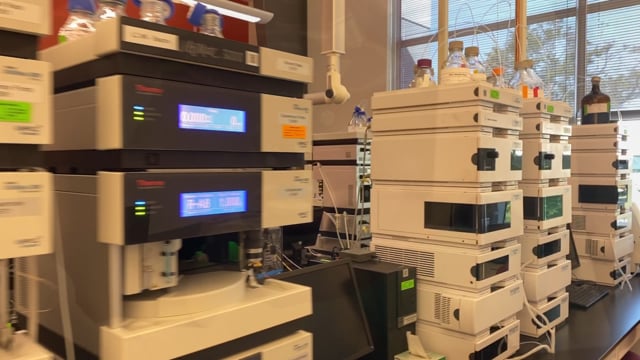
- Analytical Method Development: Utilizing state-of-the-art HPLC systems, dissolution testers, and other analytical tools to develop and validate methods for potency, impurities, and drug release, in accordance with applicable ICH and FDA guidelines.
- Data Integration and Project Tracking: Leveraging secure project management platforms to maintain transparent, real-time communication with clients and ensure alignment throughout the development life cycle.
By systematically incorporating these technologies into our workflow, DDL is positioned to address complex formulation and analytical challenges efficiently, enabling clients to make data-driven decisions at each project milestone.
Proactive Problem-Solving in Formulation and Process Design
Anticipating challenges before they escalate is a hallmark of successful topical product development. At DDL, our project teams apply a proactive, solutions-oriented mindset from the earliest phases of formulation through scale-up and clinical manufacturing. This approach is rooted in our collective experience working with a wide range of APIs, excipients, and dosage forms—enabling us to identify potential risks and mitigation strategies early in the project timeline.
Common issues addressed through proactive problem-solving include:
- API Solubility and Stability: Early pre-formulation studies are designed to assess solubility across multiple solvent systems and screen for degradation pathways under various environmental conditions.
- Physical Stability and Viscosity Drift: We conduct accelerated and real-time stability studies using ICH protocols, closely monitoring for changes in phase separation, viscosity, and appearance that could impact product quality or patient acceptability.
- Scale-up Challenges: Pilot-scale batches are manufactured under conditions that simulate clinical supply production, allowing for identification of process-critical parameters and potential bottlenecks before moving to cGMP clinical lots.
For example, when supporting a client with a high-potency corticosteroid cream, our team identified a risk of API crystallization under low-temperature storage. By reformulating with optimized co-solvent and surfactant systems, we helped the client achieve both regulatory-required stability and desirable product aesthetics.
This proactive problem-solving framework is designed to reduce surprises during late-stage development and to keep topical product development innovations firmly focused on program goals.
Topical Product Development Innovations: DDL’s Unique Approach
DDL’s approach to topical product development innovations is characterized by cross-functional integration, customized planning, and flexible execution. Unlike “one-size-fits-all” development models, we tailor each project to the client’s scientific, regulatory, and business priorities—allowing for rapid adaptation as new data or requirements emerge.
Key aspects of our unique approach include:
- End-to-End Service Integration: Combining formulation, analytical, and clinical supply manufacturing under one roof minimizes handoffs and allows for continuous feedback between disciplines. This can help reduce project cycle times and simplify decision-making.
- Client Collaboration: Regular project updates, transparent data sharing, and joint problem-solving sessions ensure that clients remain fully informed and engaged at every stage.
- Flexible Project Scoping: Whether a client needs a focused feasibility study, full IND-enabling development, or support for a technology transfer, DDL adapts our engagement model to fit the project’s evolving requirements.
- Focus on Topical and Ophthalmic Expertise: Our team understands the unique formulation, analytical, and regulatory complexities associated with topical and ophthalmic products, which allows us to anticipate and address category-specific challenges.
A recent example involved supporting a biotech client developing a novel ophthalmic suspension. By integrating formulation design, analytical development, and small-batch clinical manufacturing, we were able to facilitate a smooth transition from preclinical proof-of-concept to first-in-human studies—all within a single, coordinated project plan.
This level of integration is central to DDL’s model for topical product development innovations, helping our clients navigate increasingly complex development landscapes with confidence and agility.
Adapting to Evolving Regulatory and Industry Trends
Staying current with regulatory expectations and industry trends is critical for successful topical product development. DDL actively monitors changes in FDA guidance, ICH quality standards, and emerging best practices in formulation and analytical science. Our team translates these insights into project strategies that are designed to support compliance and technical justification for each unique product.
Recent regulatory shifts have emphasized the importance of:
- Impurity Profiling: Enhanced scrutiny on genotoxic impurities, extractables/leachables, and residual solvents for topical and ophthalmic products.
- In Vitro Release Testing (IVRT): Increased use of validated IVRT methods for demonstrating batch-to-batch consistency and supporting bioequivalence submissions for generic topicals.
- Quality by Design (QbD): Encouragement of risk-based approaches to process and formulation development, including systematic identification of critical quality attributes (CQAs) and process parameters (CPPs).
DDL’s regulatory team works closely with clients to:
- Align development plans with current FDA and international expectations for documentation, analytical validation, and stability protocols.
- Provide technical summaries and justifications to support regulatory submissions, including pre-IND, IND, and ANDA filings.
- Facilitate responses to agency questions by maintaining well-organized project documentation and data traceability.
By remaining agile and informed, DDL helps clients proactively address regulatory changes, minimizing the risk of late-stage project delays and supporting the advancement of topical product development innovations in a highly regulated environment.
Accelerating Development Timelines Through Integrated Services
With increasing pressure to advance assets quickly and efficiently, integrated development services have become a central pillar of topical product development innovations. DDL’s model is specifically designed to connect formulation, analytical, and clinical supply activities under a single project management structure, significantly reducing the time and risk associated with traditional, multi-vendor development models.
The key advantages of our integrated approach include:
- Streamlined Project Handoffs: Internal coordination between formulation, analytical, and manufacturing teams enables rapid data sharing and faster resolution of technical questions.
- Parallel Workstreams: Analytical method development and process scale-up activities can often be conducted in parallel, supporting project acceleration without sacrificing quality or compliance.
- Centralized Data Management: A unified data repository facilitates real-time project tracking, audit readiness, and streamlined regulatory documentation.
For example, a recent project involving a topical gel for dermatological use leveraged DDL’s integrated services to move from initial feasibility through clinical supply manufacturing in less than 10 months. By eliminating external handoffs and aligning timelines across all project functions, our team helped the client meet aggressive internal milestones while maintaining compliance with cGMP and ICH standards.
This integrated services model is a core driver of DDL’s ability to deliver efficient, high-quality topical product development innovations tailored to client needs.
Responsive Communication as a Driver of Project Innovation
Technical expertise and innovative infrastructure are only part of the equation—responsive, transparent communication is essential for successful topical product development. At DDL, we prioritize active listening, timely updates, and proactive engagement with client teams. This communication philosophy is designed to foster trust, accelerate decision making, and keep projects on track even when challenges arise.
Key communication strategies include:
- Dedicated Project Managers: Each client is assigned an experienced project manager who serves as the single point of contact, coordinating resources and ensuring consistent information flow across all project stages.
- Regular Progress Meetings: Scheduled teleconferences and milestone reviews keep clients informed of progress, emerging risks, and next steps—without unnecessary delays or information bottlenecks.
- Transparent Reporting: Clear, structured reporting of technical data, deviations, and timelines ensures that clients have the information needed to make informed decisions quickly.
For instance, in a recent topical formulation project, early identification of a raw material supply chain issue allowed our team to communicate options and implement a contingency plan before project timelines were impacted. This responsiveness is a core component of how DDL supports topical product development innovations and client success.
Continuous Learning and Team Development to Sustain Innovation
Sustained innovation in topical product development requires ongoing investment in team knowledge and skill development. Dow Development Labs fosters a culture of continuous learning by providing access to scientific conferences, industry seminars, and in-house training programs focused on emerging trends, regulatory updates, and new technical methodologies.
Elements of our continuous learning strategy include:
- Cross-Disciplinary Training: Encouraging team members to broaden their expertise in formulation, analytical, and manufacturing disciplines to better anticipate project needs and support integrated problem-solving.
- Regulatory and Quality Workshops: Regular sessions on evolving FDA requirements, ICH updates, and quality system best practices keep the team prepared for shifting industry expectations.
- Knowledge-Sharing Forums: Internal seminars and case study reviews facilitate the exchange of project learnings and innovation strategies across the organization.
These efforts help ensure that DDL’s technical staff remain current with the latest science and regulatory developments, which is essential for delivering topical product development innovations that meet the needs of today’s pharmaceutical and biotech industry.
By continuously investing in our team, Dow Development Labs positions itself as a reliable, forward-thinking partner for companies seeking to advance topical and ophthalmic drug products.
Ready to take the next step in your topical drug development program? Contact Dow Development Labs at 707-202-6965 to discuss how our integrated, innovation-focused services can help you achieve your project goals efficiently and confidently.
Frequently Asked Questions
What are the latest innovations in topical product formulation?
Recent innovations in topical product formulation include the use of advanced excipients for improved solubility, novel drug delivery approaches, and robust analytical methods to ensure stability and bioavailability. Companies like Dow Development Labs focus on tailored solutions to address these unique formulation challenges.
How does process engineering improve topical drug development?
Process engineering streamlines the transition from preclinical to clinical manufacturing by designing scalable and cGMP-ready processes. This approach reduces inefficiencies and ensures that products can be reliably produced as they move through development stages.
What regulatory considerations are important for innovative topical products?
It's crucial to align with current regulatory expectations, especially for 505(b)(2) and generic topical pathways. This involves thorough documentation, technical justification, and proactive engagement with regulatory changes to ensure a smooth approval process.
How can I partner with Dow Development Labs for topical product development?
You can contact Dow Development Labs at 707-202-6965 to discuss your project and get expert guidance on formulation, analytical support, and clinical manufacturing. Their integrated approach helps accelerate your product's path to market.
What challenges are unique to developing topical and ophthalmic products?
Topical and ophthalmic products often face challenges like poor solubility, stability issues, and achieving adequate bioavailability. Addressing these requires specialized formulation strategies and analytical testing, areas where Dow Development Labs excels.